
Tree Cabling and Bracing in Edmonton: Keeping Valuable Trees Standing Safely
When a tree has a structural problem, removal is not always the only answer. A mature tree that has been on a property for decades has real value, and in a lot of cases a well-designed cabling or bracing system can manage the risk, extend the tree’s life significantly, and save you the cost and disruption of taking it down and starting over.
That said, cabling and bracing is not a fix for every situation, and installing a system on a tree that genuinely needs to come down creates a false sense of security that can lead to worse outcomes. At Trusty Tree Services, we start with an honest structural assessment and give you a straight answer on whether support is the right call or whether removal is actually the safer path.
It Starts With a Detailed Structural Assessment
Before any hardware goes into a tree, we evaluate it thoroughly. Branch attachment angles, included bark, decay, canopy weight distribution, and the tree’s exposure to wind and snow loading all factor into whether cabling, bracing, or a combination of both makes sense. We look at the whole picture, not just the obvious defect, because a support system is only as good as the assessment behind it.
If the tree is a good candidate, we design a system appropriate for its specific structure and site conditions. If it is not, we will tell you that too, along with what we recommend instead.
Cabling and Bracing: What Each One Does
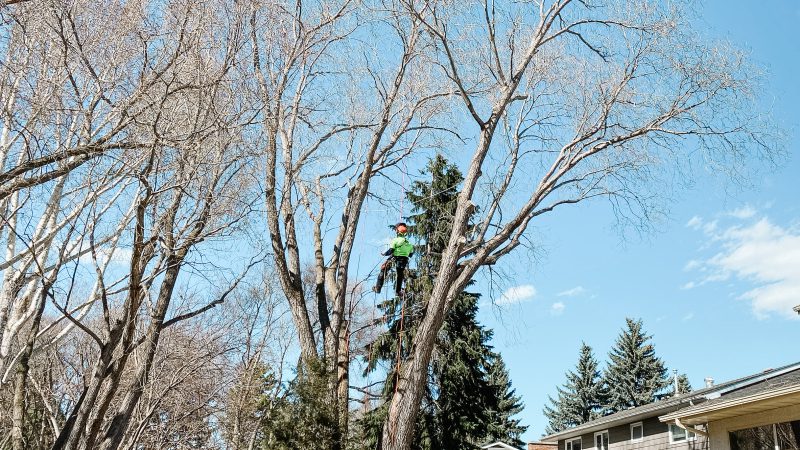
Tree Cabling
Cabling systems are installed high in the canopy to limit the movement of co-dominant stems or long, overextended limbs. By reducing excessive motion during high winds or heavy snow events, cabling helps redistribute mechanical stress across the tree and lowers the risk of sudden failure. The cables do not eliminate movement entirely, they manage it, which is an important distinction.
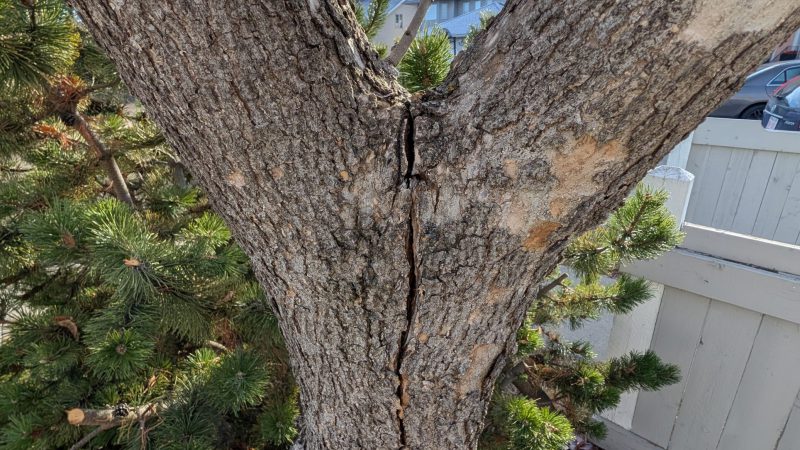
Tree Bracing
Bracing involves the installation of threaded rods through weak unions or split sections of the trunk to provide reinforcement directly at the point of structural weakness. Where cabling works from above to limit movement, bracing works at the defect itself to hold the structure together. In many cases, cabling and bracing are used together to address different aspects of the same structural problem.
Installation Done Right Makes All the Difference
Improperly installed cabling or bracing is not just ineffective, it can create new hazards or cause damage to tree tissue over time. Hardware selection, placement, and tensioning all matter, and getting them wrong can accelerate decline rather than slow it down.
Our crews follow industry best practices for every installation. Materials are selected for durability and long-term performance, and the installation methods we use are chosen to minimize wounding and support the tree’s natural growth response. The goal is a system that does its job without compromising the health of the tree it is protecting.
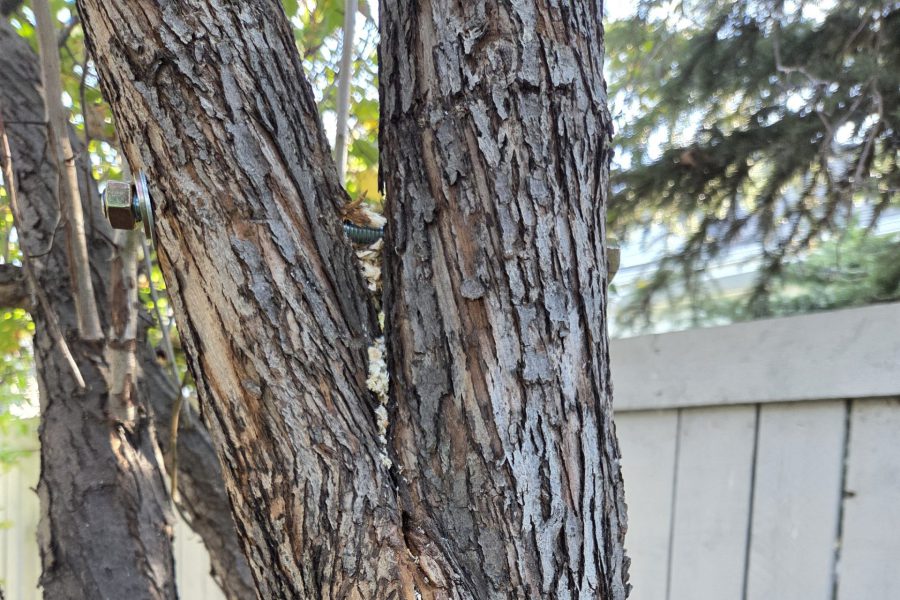
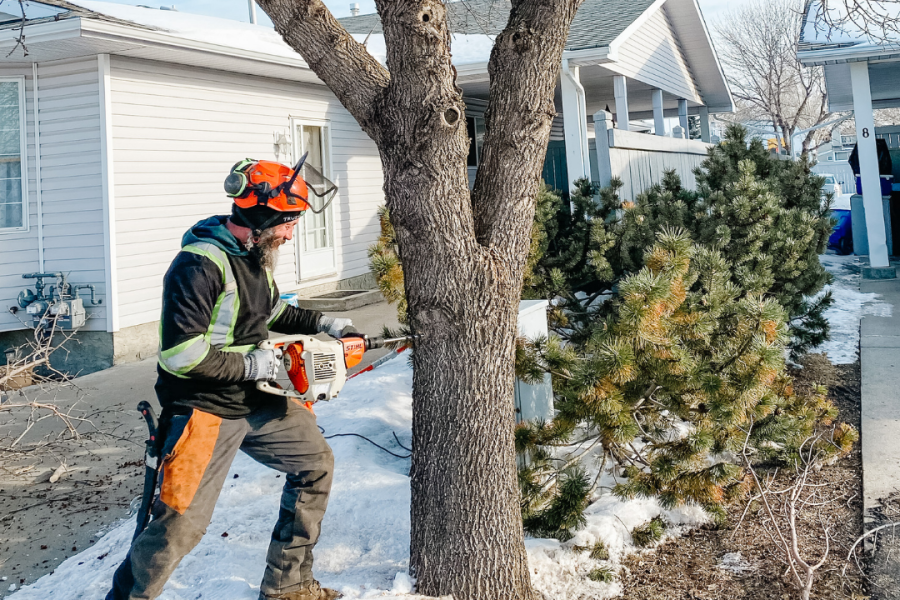
Cabling and Bracing Needs to Be Monitored Over Time
Trees grow and change, and a support system that is correctly sized and positioned today may need adjustment in a few years as the tree develops around the hardware. We recommend periodic inspections to assess hardware condition, how the tree has responded, and whether any changes in structural integrity require attention. Staying on top of this is what keeps the system working the way it should.
Cabling and Bracing for Every Property Type
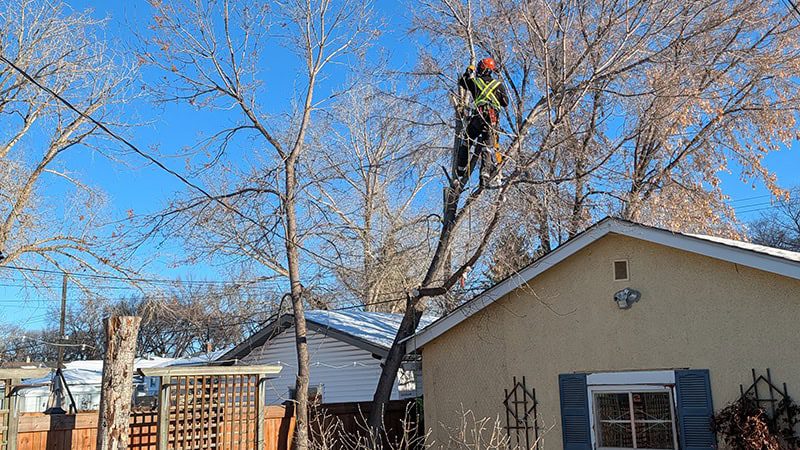
At Your Home
Residential cabling and bracing is often about preserving a tree that has real meaning on the property, whether that is a mature shade tree, a landmark specimen, or something that has simply been there as long as the house has. We assess the situation honestly, explain what the system will and will not do, and install it carefully to protect both the tree and everything around it.
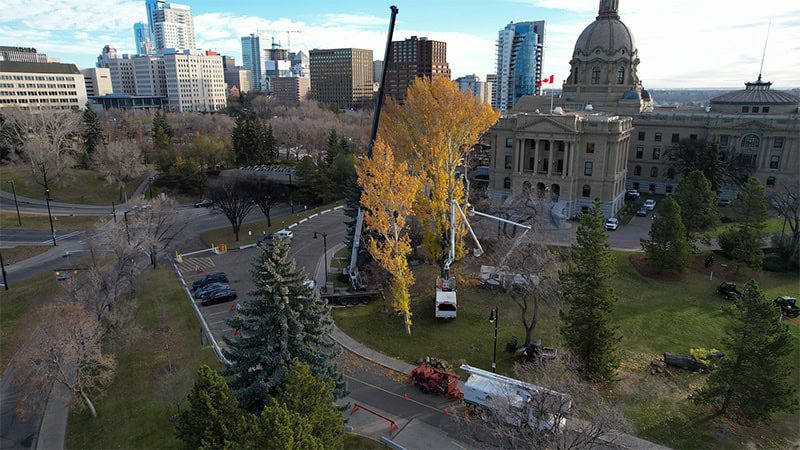
On Commercial Properties
For commercial clients, cabling and bracing is usually part of a broader risk management and asset management approach. Preserving mature trees avoids the cost and disruption of removal and replacement, maintains landscape continuity, and reduces liability exposure from structural failures. We work with property managers to determine where support systems make sense within the context of long-term site goals and safety requirements.
Get a Free Cabling and Bracing Assessment in Edmonton
If you have a tree with a split trunk, a heavy co-dominant stem, or a limb you are not sure about, come out and take a look with us. We will give you an honest assessment and a clear recommendation, whether that is a support system, a pruning solution, or a conversation about removal if that is genuinely the right answer.
We serve Edmonton, Sherwood Park, St. Albert, Spruce Grove, Fort Saskatchewan, Leduc, Beaumont, and surrounding communities. Call 780-860-5500 or reach out online to book your free assessment.
Tree Cabling and Bracing FAQ
How do I know if my tree needs cabling or bracing?
The most common signs are co-dominant stems, which are two or more trunks of similar size growing from the same point, included bark where the bark is pinched between stems rather than forming a strong attachment, long heavy limbs that extend well beyond the canopy, or a trunk that has already begun to split. These are not automatic sentences to removal, but they do warrant a proper structural assessment to understand the actual risk and whether a support system is appropriate.
Can cabling save a tree that has already started to split?
Sometimes, yes. It depends on how far the split has progressed, what species the tree is, the overall condition of the tree, and where it is located. In some cases a combination of bracing through the split and cabling above to limit further movement can stabilize the tree effectively. In others, the structural integrity has been compromised to the point where no support system can make it safe to retain. That is the kind of honest assessment we provide before recommending anything.
Does cabling hurt the tree?
When installed correctly, the impact on the tree is minimal. Hardware is selected and positioned to minimize wounding, and the installation methods we use are chosen to support the tree’s natural growth response rather than fight against it. Improperly installed systems are a different story: wrong hardware, wrong placement, or cables that are too tight can damage tissue and accelerate decline. This is why who installs the system matters as much as whether you install one.
How long does a cabling or bracing system last?
The hardware itself is selected for durability and long-term performance, but how long a system remains effective depends on how the tree grows around it over time. Trees can grow into hardware, cables can lose appropriate tension, and structural conditions can change. This is why periodic inspections are an important part of any cabling and bracing program. We recommend having installed systems checked regularly so adjustments or upgrades can be made before they become necessary.
Is cabling a permanent fix?
It is better to think of it as ongoing risk management rather than a one-time fix. A properly designed and installed support system significantly reduces the likelihood of failure, but it does not eliminate risk entirely, and it needs to be monitored and maintained over time. Combined with appropriate pruning to manage canopy weight and load distribution, cabling and bracing can extend the life of a valuable tree considerably, but it works best as part of a broader care plan rather than a standalone solution.