
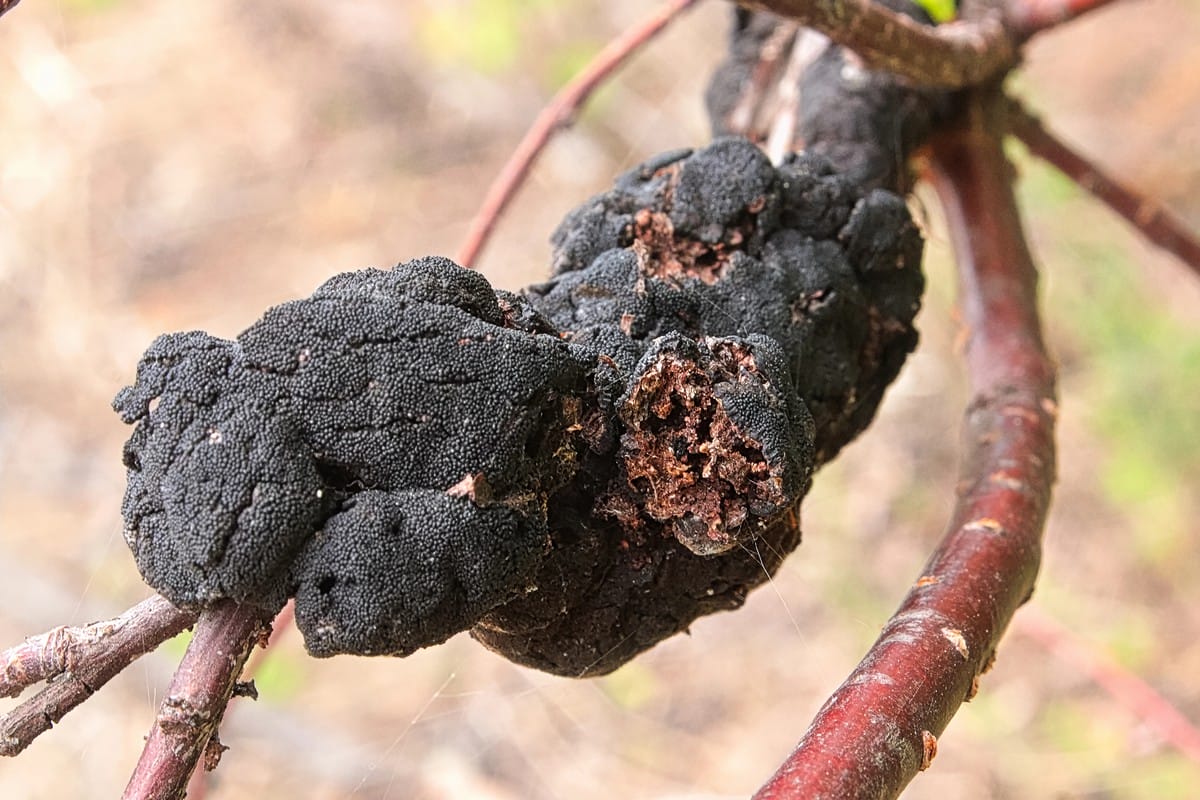
When winter says goodbye to welcome brighter skies and longer days, it means that spring is approaching. If you are a tree enthusiast, this is a critical time to consider your plants’ health. It may still be a little cold outside, as it should be in February. During this time, you may be faced with a unique issue to combat. One concern is tree diseases, such as Black Knot (Apiosporina Morbosa). Professionals from tree care services in Edmonton can help find management practices for these tree health issues.
Identification: Spotting the Black Knot
Black Knot is a fungal disease that primarily affects Prunus species, such as Schubert Chokecherry and Mayday. Both species are common in Edmonton. From the winter months, symptoms may start to appear. Leaves fall, revealing tar-like swelling on the branches. Bare tree limbs start to showcase these growths, which can be mistaken for wounds or natural growth. Here’s the time when Edmonton tree care experts can come to your rescue. Experienced arborists know that Black Knot is not a natural occurrence at all. It highlights the fact that the tree is being attacked.
Fungus begins to attack the tree’s vascular system, disrupting the natural flow of water and nutrients. If the disease is not treated on time, it can lead to serious damage and even death. In the colder months, it becomes more visible. You should also know that February is the best time to take action.
Transmission Cycle: Why Treating the Disease is Important Now
The lifecycle of Black Knot revolves around spore release, which occurs especially during wet spring weather. Because it is airborne, it spreads quickly and makes the surrounding trees susceptible. Therefore, intervention by professional tree care service providers is essential. Pruning the infected tree is the only solution during the wintertime. It intercepts the cycle and slows the spread of disease. Once the spores are released, it becomes almost impossible to save the trees as the infection spreads rapidly throughout the garden and surrounding areas.
That is why you need to act quickly in February. Experts can identify diseased trees and explain options to mitigate its progression.
Surgical Pruning: Take a Professional Approach
During this time, a simple trimming may not be enough to control Black Knot. Experts from the tree care services can handle the situation effectively. Through pruning, experts remove at least 6-8 inches below the knot to eliminate the fungal tissues.
Tree care experts usually sterilize pruning tools to prevent cross-contamination. Following the sanitation protocol is important. Otherwise, further spread may occur, making it more difficult to manage the Black Knot between trees.
Disposal Compliance: Prevent Chances of Re-infection
Removing the infected branches, tree care experts in Edmonton dispose of them properly. Composting the diseased wood is never a good idea. It is better not to keep them within the property, as spores on the ground can spread again. Professionals recommend disposing of the removed parts safely and appropriately.
Trusty Tree is one of the leading tree care services in Edmonton. We cut, remove, and properly dispose of infected branches.
See black lumps on your cherry tree? Stop the spread before spring. Call Trusty Tree Services for specialized sanitary pruning.
📞 Call us for a free estimate 780-860-5500
🔗 Visit our website to learn more https://trustytree.ca/
Trusty Tree Services supports municipal and utility projects while delivering safe, efficient tree care to industrial, commercial, and residential clients in the Edmonton and surrounding area.
Related Articles
- The Winter Pruning Calendar: Timing Your Tree Cuts for a Healthier Spring in Edmonton
- How to Choose the Right Tree Care Expert
Follow Us on Social Media
Stay updated with our latest news and tips by following us on Facebook and Instagram