Tree and Shrub Fertilizing for Edmonton's Tough Urban Soils

Most urban trees are growing in conditions that are nothing like what they evolved for. Compacted soil, disrupted drainage, construction disturbance, foot traffic, and depleted nutrient levels all work against healthy root development and long-term vigour. If your trees or shrubs look like they are just getting by rather than thriving, the soil is often a big part of the story.
At Trusty Tree Services, fertilizing is not a spray-and-pray service. Our programs are built around what your specific plants actually need, based on a real assessment of their health, the soil conditions, and the stressors they are dealing with. The goal is stronger, more resilient trees, not just a temporary green-up.

We Assess First, Then Fertilize

Not every tree that looks stressed needs fertilizer, and applying the wrong treatment at the wrong time can do more harm than good. Before we recommend anything, we evaluate plant health, species requirements, and the environmental stressors at play on your site. That tells us whether fertilization is the right call and, if so, what formulation and application method will actually make a difference.
Fertilization is most effective when it supports overall plant health rather than forcing excessive growth. Rapid, weak growth driven by too much of the wrong nutrient is not what we are after. We prioritize balanced nutrient delivery that builds root development, improves canopy density, and increases resistance to pests, disease, and environmental stress over time.
Fertilizing

Getting Nutrients Where They Need to Go

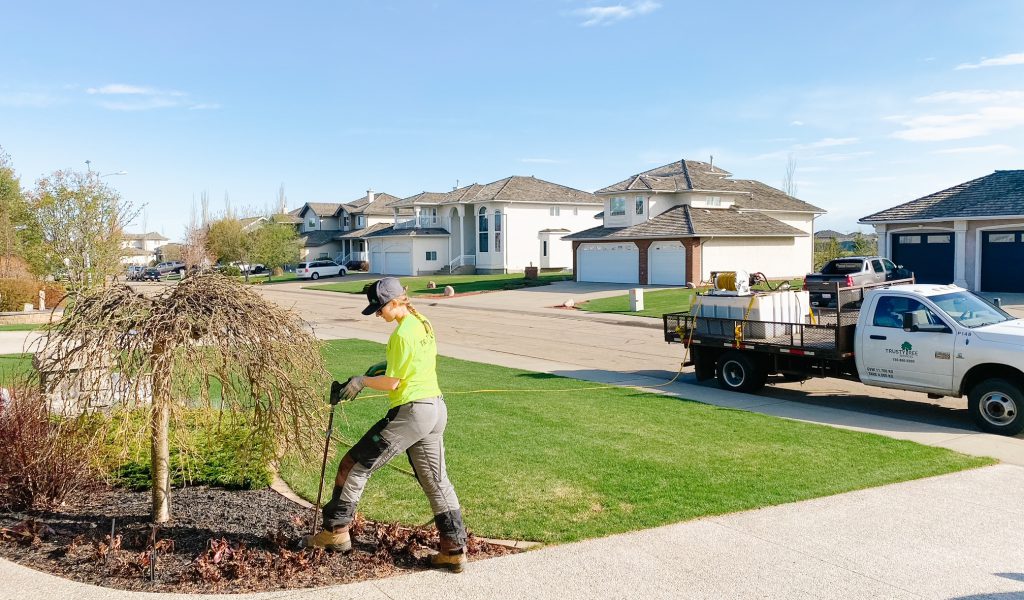
Surface applications are not always the most effective approach, especially in compacted urban soils where nutrients can struggle to reach the root zone. Depending on your site and what the plants need, we use subsurface injection or root-zone treatments that deliver nutrients directly where they will do the most good.
Where appropriate, slow-release fertilizers and soil amendments are used to provide consistent nutrient availability over time rather than a single surge that leaches away quickly. Care is taken throughout the application to protect surrounding turf, hardscape, and any sensitive areas on your property.

Fertilizing Programs for Every Property
Tree-and-Shrub-Fertilizing-Photo-4

At Your Home

Residential fertilizing is about keeping the trees and shrubs you have invested in performing at their best. Whether you have mature trees that need support, newly planted specimens working through establishment, or shrubs that have been looking a little rough, we assess the situation and recommend a treatment plan that fits the plant and the site. Our crews work carefully around your gardens and outdoor spaces and leave things tidy when we are done.
Tree-and-Shrub-Fertilizing-Photo-5

On Commercial Properties

For commercial and multi-unit properties, healthy trees and shrubs contribute to a professional appearance and reduce the likelihood of decline-related removals or emergency interventions that are always more disruptive and expensive than proactive care. We work with property managers to schedule fertilization at the right times of year and align treatments with other maintenance activities so everything runs efficiently.

Applied Responsibly, With the Environment in Mind

We pay close attention to application rates, timing, and weather conditions to reduce runoff and minimize environmental impact. Fertilizing done right improves soil function and plant health over time, it does not just dump inputs into the ground and hope for the best. By focusing on what the plant and soil actually need, we help you maintain a healthy landscape in a way that is sustainable long-term.

Book a Tree and Shrub Fertilizing Assessment in Edmonton

If your trees or shrubs are not performing the way they should, or you want to stay ahead of decline before it becomes a bigger problem, give us a call. We will come out, take a proper look, and tell you honestly whether fertilizing makes sense and what the right approach would be.

We serve Edmonton, Sherwood Park, St. Albert, Spruce Grove, Fort Saskatchewan, Leduc, Beaumont, and surrounding communities. Call 780-860-5500 or reach out online to get started.

Tree and Shrub Fertilizing FAQ

How do I know if my trees or shrubs need fertilizing?

There are a few things to look for: slower than normal growth, smaller or lighter coloured leaves than usual, early leaf drop, or a general lack of vigour compared to previous years. Urban trees are especially prone to nutrient deficiencies because the soil they grow in is often compacted, disturbed, or depleted from construction and foot traffic. That said, not every stressed tree needs fertilizer, and misdiagnosing the problem can lead to treatments that do not help. We assess the plant and the site before making any recommendations.
Not quite. Lawn fertilizers are formulated for grass, not trees and shrubs, and surface application is often not the most effective delivery method anyway, especially in compacted urban soils. We use formulations suited to trees and shrubs and apply them through subsurface injection or root-zone treatments that get nutrients directly into the root system where they are actually needed. The approach is targeted, not generalized.
Timing matters quite a bit. Applications are planned around the plant’s growth cycle, soil conditions, and weather to maximize uptake and minimize the risk of nutrient leaching or runoff. Fertilizing at the wrong time of year can stimulate weak late-season growth that is vulnerable to winter damage. We schedule treatments based on what will actually benefit the plant, not just what is convenient.
It depends on what is causing the decline. Fertilization can support recovery if nutrient deficiency or poor soil conditions are part of the problem, but it is not a cure-all. If a tree is declining due to disease, pest pressure, root damage, or structural issues, fertilizing alone will not turn things around. That is why we assess the plant first and identify the actual cause before recommending any treatment. If something else is going on, we will tell you.
Yes, where appropriate. Slow-release fertilizers and soil amendments are often the better choice because they provide consistent nutrient availability over time rather than a single surge that the plant may not be able to fully use. This reduces the risk of nutrient leaching into the surrounding environment and supports steadier, healthier growth. The right product depends on the plant, the soil, and what we are trying to achieve, which is why the assessment comes first.