
Municipal Tree Inventory and Mapping for Edmonton and Surrounding Communities
You cannot manage what you do not know you have. Municipal tree populations represent significant public assets, and managing them effectively, safely, and within budget requires accurate, up-to-date information about what is out there, where it is, and what condition it is in. Without that foundation, maintenance programs run on assumptions, risk goes undetected until something fails, and budgeting is more guesswork than planning.
At Trusty Tree Services, municipal tree inventory and mapping is delivered as a strategic planning tool rather than an administrative exercise. We work with municipal teams across Edmonton and Area to build accurate, practical datasets that support maintenance planning, risk management, budgeting, and public accountability, giving municipalities a clear picture of their urban forest and the confidence to manage it well.
What Gets Collected in the Field
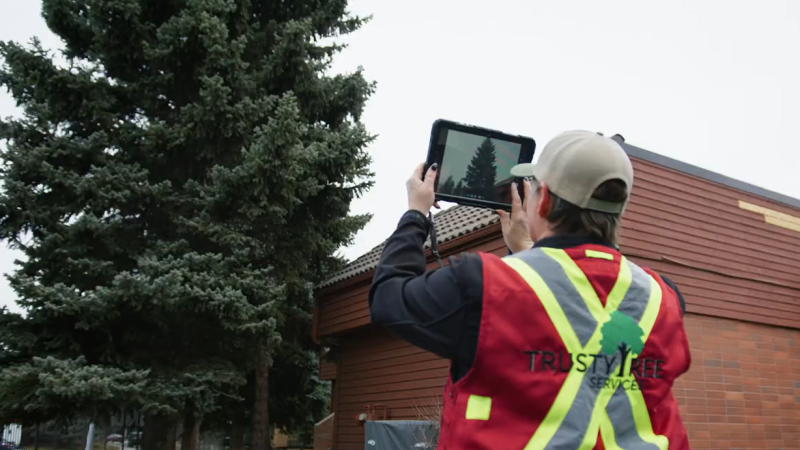
Our inventory process begins with systematic field data collection across streets, parks, boulevards, and other municipal lands. Each tree is identified and recorded based on key attributes including species, size, condition, structural characteristics, and location. Site factors such as proximity to infrastructure, sidewalks, roadways, utilities, and buildings are documented alongside the tree data to provide the context needed for maintenance and risk decisions.
Data is collected using modern digital tools that allow for accurate, consistent recording across large tree populations. Field teams follow a standardized protocol so data quality is uniform whether the inventory covers one neighbourhood or an entire municipality.
What the Data Gets Used For
Maintenance Planning
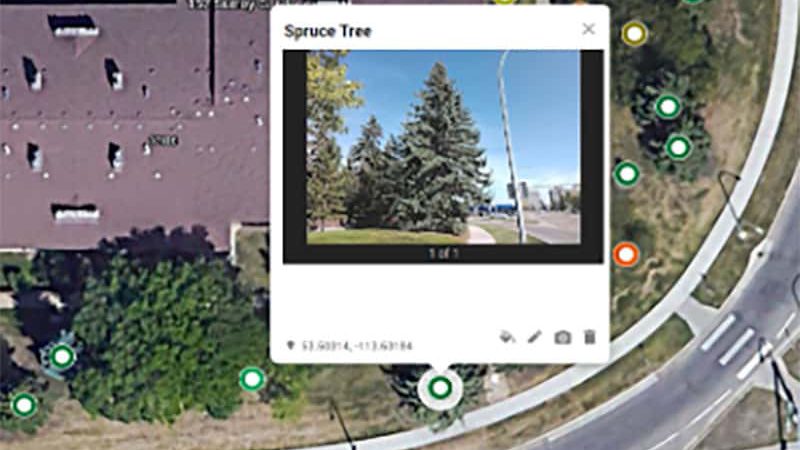
Knowing the species, size, condition, and location of every tree in the municipal population allows maintenance programs to be planned logically rather than reactively. Pruning cycles can be scheduled based on species growth rates and condition data. Removals can be anticipated and budgeted in advance. Work routes can be optimized to reduce crew travel time. The inventory is what makes a proactive program actually work in practice.
Risk Management
Inventory data flags trees with structural concerns, decline trends, or proximity to high-use areas that warrant closer attention. By identifying developing issues before they become hazards, municipalities can address them through scheduled maintenance rather than emergency response. This reduces unexpected costs, lowers liability exposure, and keeps the urban forest in better overall condition year over year.

Budgeting and Asset Management
A comprehensive inventory gives finance and operations teams the data they need to forecast maintenance costs more accurately. Knowing the size and condition distribution of the tree population, which trees are approaching end of life, and what the expected maintenance demand looks like over the next several years makes budget conversations grounded in evidence rather than estimates. Inventory data updated over time tracks changes in condition, growth, and risk as a living dataset.
Coordination with Other Departments and Trades
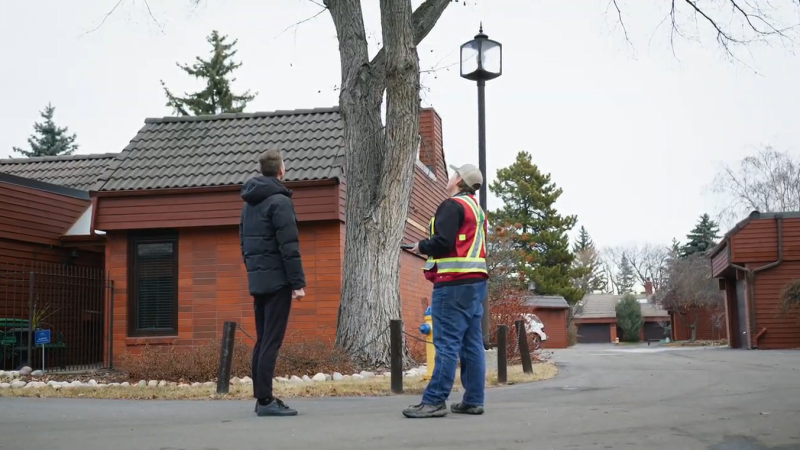
Accurate tree location and condition data is valuable well beyond the forestry department. Engineers, transportation planners, landscapers, architects, and contractors working on road, utility, or development projects need to know what trees are present and where before they start. Providing that information up front reduces conflicts, avoids costly surprises during construction, and supports better project coordination across departments and with external trades.
Mapping That Makes the Data Usable
Field data is only as useful as the format it comes back in. Using modern mapping tools, we create clear spatial records that allow municipalities to visualize tree locations and characteristics across their jurisdiction. Maps support efficient work planning, route optimization, and communication between departments and contractors. The spatial layer is what transforms a list of tree records into something a crew supervisor, a planner, or a council member can actually use.
Transparency and Public Accountability
Clear inventory records help municipalities respond more effectively to public inquiries, council reporting requirements, and regulatory obligations. When a resident asks why a tree was removed, or a councillor asks about the condition of trees in a particular neighbourhood, accurate data makes those conversations straightforward. It demonstrates that decisions are being made based on evidence and that public assets are being managed responsibly.
Frequently Asked Questions
How long does it take to complete a municipal tree inventory?
Timeline depends on the size of the tree population, the geographic area, and the level of detail required. A single neighbourhood or park can be completed quickly. A full municipal inventory covering streets, parks, and public lands across a larger community is a multi-phase project scoped based on your specific situation. We work with municipal teams to phase the work in a way that fits operational schedules and delivers usable data at each stage rather than waiting until the entire inventory is complete.
What format does the inventory data come back in?
We work with municipalities to deliver data in formats that integrate with their existing asset management systems, GIS platforms, or work order software. The goal is data that gets used, not a report that sits in a folder. If a municipality does not yet have an established system, we can discuss what format makes the most sense for how their team works and what they need the data to do.
How does inventory data stay current after the initial collection?
An inventory is most valuable as a living dataset that gets updated over time. Condition changes, removals, new plantings, and risk findings from ongoing maintenance and assessment work should feed back into the dataset regularly. We can build update cycles into an ongoing service relationship, or municipalities can maintain the data internally using the structure we establish. Either way, the initial inventory creates the foundation that all future updates build on.
Can tree inventory data be used to support grant applications or provincial reporting?
Yes. Documented tree population data, including species composition, canopy coverage estimates, and condition distribution, supports a range of reporting and funding applications related to urban forestry programs, environmental planning, and community sustainability initiatives. Having accurate, current inventory data puts municipalities in a much stronger position when those opportunities arise than having to compile estimates from scratch.
Does a tree inventory integrate with your other municipal services?
Yes, and that integration is one of the most practical benefits. Inventory data feeds directly into maintenance planning, risk assessment programs, and hazardous tree removal prioritization. When ongoing maintenance findings update the inventory, the dataset improves with every service cycle. Municipalities that combine inventory and mapping with our urban forestry maintenance and risk assessment services get a program where the data and the fieldwork continuously reinforce each other.