Hazardous Tree Removal in Public Spaces Across Edmonton and Area

A hazardous tree in a park, along a boulevard, or beside a school is not the same as a hazardous tree in a private backyard. The exposure is higher, the consequences of a failure are more serious, and the standard of care required to remove it safely in a public environment is a different level of work. Traffic needs to be managed. Pedestrians need to be protected. The job needs to be done right, visibly and professionally, in a space that belongs to the community.
At Trusty Tree Services, hazardous tree removal for municipalities is a public-safety-driven service built on disciplined planning, trained crews, and proven removal systems. We work with municipal teams across Edmonton and Area to address hazardous trees promptly and professionally, reducing liability, protecting infrastructure, and maintaining safe public spaces for residents.

Assessment and Risk Evaluation
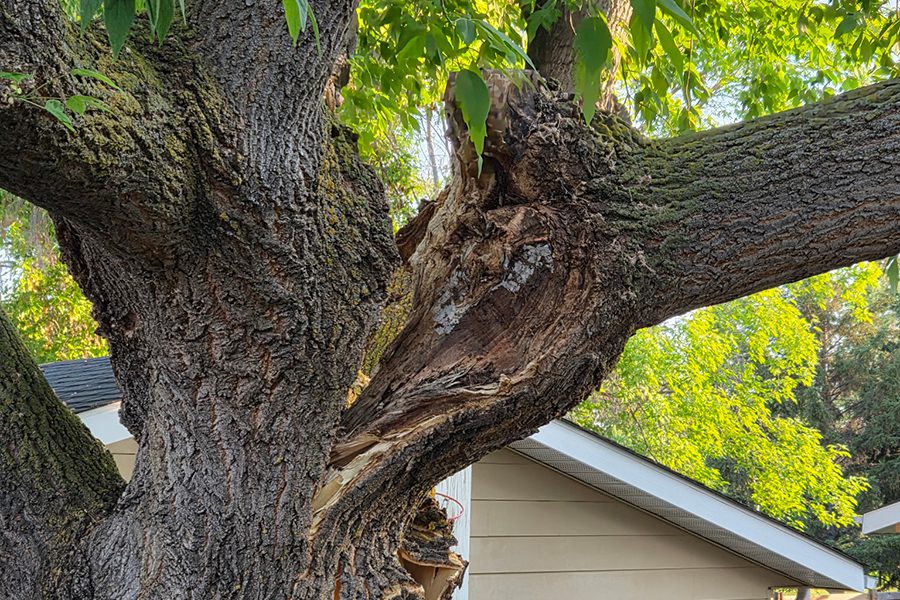
Every hazardous tree removal starts with a detailed site and risk assessment. We evaluate tree condition, failure potential, fall zones, pedestrian and vehicle traffic patterns, nearby structures, utilities, and access constraints. Trees located along roadways, in parks, near schools, trails, and playgrounds get heightened scrutiny because the exposure and consequence of a failure in those locations is highest.
That assessment determines the removal method, the equipment required, the traffic control measures needed, and how the work gets sequenced to keep risk predictable from start to finish. Nothing gets improvised on a public-space removal.
Hazardous-Tree-Removal_Assesment-and-Risk
Hazardous-Tree-Removal-Photo_Removal-Techniques-for-Municipal

Public Safety During the Operation

Keeping the public safe while the work is happening is as important as the removal itself. Work is planned to maintain safe access for pedestrians and vehicles while minimizing disruption to the surrounding area. Where required, our team coordinates traffic control, sidewalk closures, and public notifications in accordance with municipal standards.
Clear work zones, proper signage, and consistent communication ensure operations are carried out safely and professionally in public environments. Residents and commuters interact with our crews directly, and how that goes reflects on the municipality. We take that seriously.

Removal Techniques for Municipal Settings
Removal-Techniques-for-Municipal-Settings-Controllleded

Controlled Sectional Dismantling

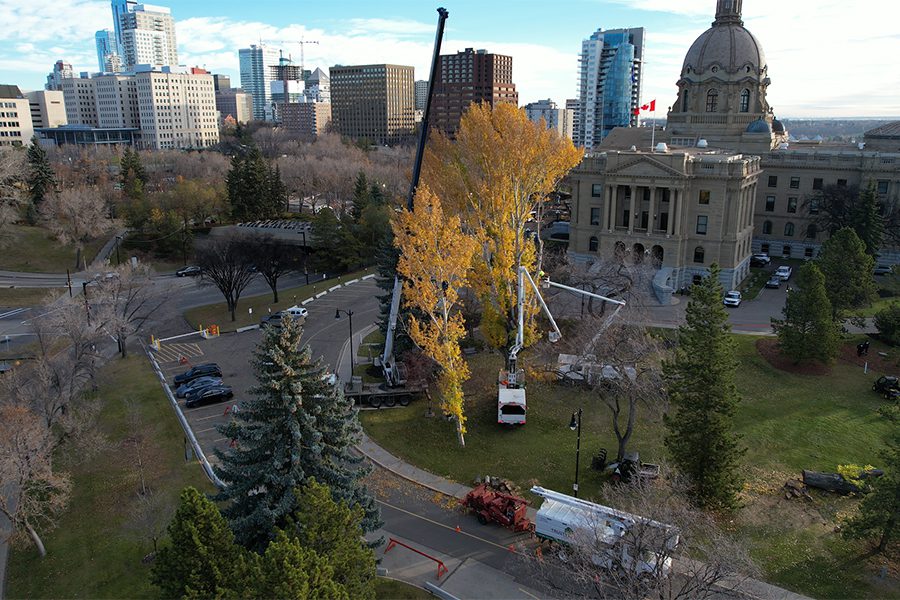
Most hazardous tree removals in urban public spaces cannot be felled in a single drop. Roads, sidewalks, structures, and utilities in every direction mean the tree has to come down in sections. Our crews use controlled sectional dismantling with rigging systems engineered to manage each load precisely, protecting roads, sidewalks, underground services, and surrounding infrastructure throughout the process.
Removal-Techniques-for-Municipal-Settings_Crane-Assisted-Lift

Crane-Assisted Removal

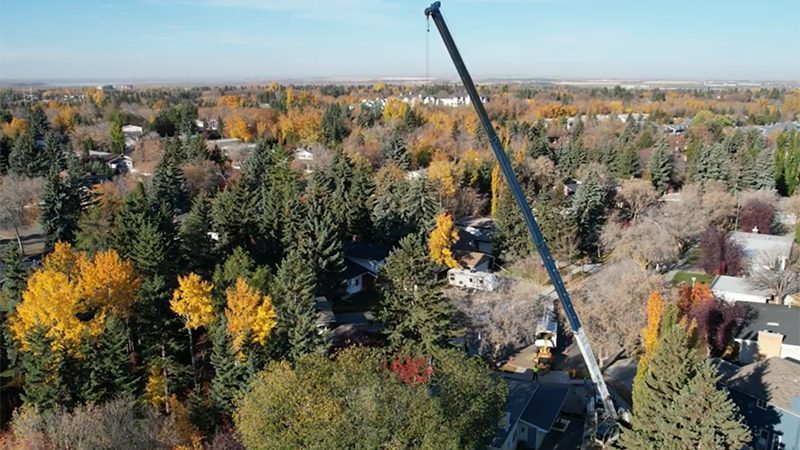
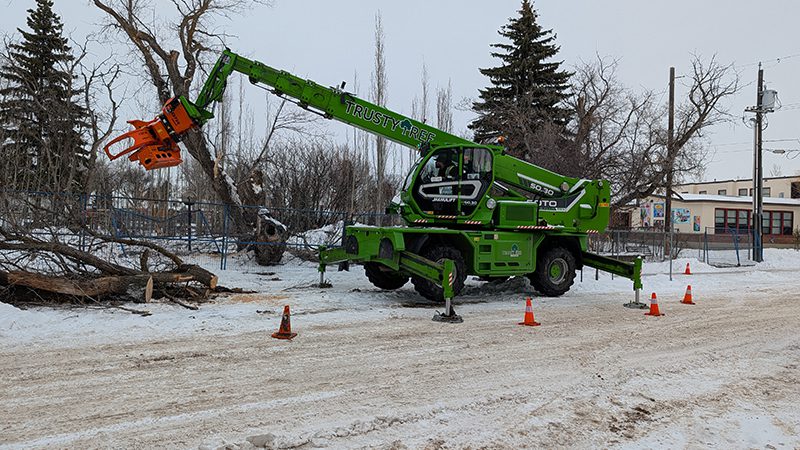
When sectional dismantling alone is not enough to manage the risk, crane-assisted removal gives us a higher degree of control. The crane holds each section as cuts are made, allowing material to be lifted and placed precisely rather than swung or dropped. This is the right approach for large trees in constrained locations, trees adjacent to high-traffic areas, or situations where any uncontrolled movement could cause serious damage.
Removal-Techniques-for-Municipal-Settings_Aerial-Lift-Access

Aerial Lift Access

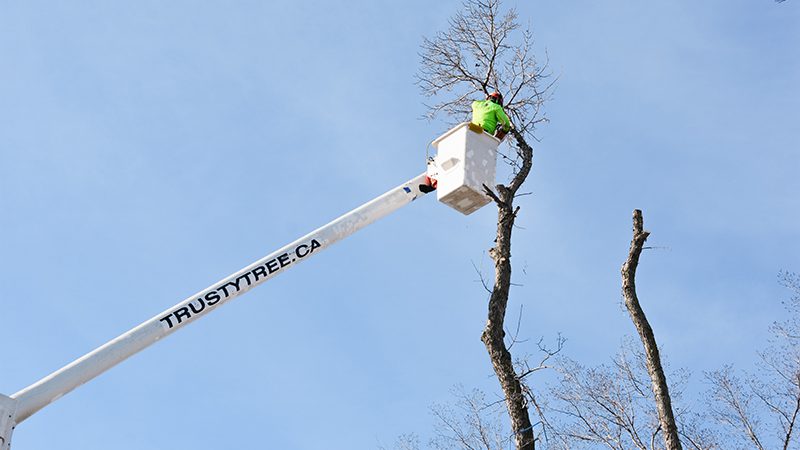
Bucket trucks give our crews stable, controlled access to the canopy without climbing into a structurally compromised tree. For hazardous trees where decay, cracks, or structural defects make climbing unsafe, aerial lift access keeps personnel out of the tree entirely while maintaining the precision needed for a controlled removal. It also allows work to proceed efficiently in high-traffic locations where minimizing time in the work zone matters.

Site Restoration and Cleanup

Public spaces need to go back into service quickly after a removal. Where feasible, removed material is processed on site through chipping or hauled to approved facilities. Stumps can be ground below grade to restore site usability and eliminate tripping hazards. Work areas are left clean, safe, and ready for continued public use before our crew clears out. That is the standard, not the exception.

Documentation and Reporting

Every municipal hazardous tree removal is documented to support asset management, regulatory compliance, and due diligence requirements. Clear records of what was removed, where, why, and how help municipalities track risk mitigation efforts, respond to public inquiries, and plan future maintenance activities. That paper trail matters when accountability is on the line.

Frequently Asked Questions

How does a tree in a public space get flagged as hazardous?

Hazardous trees are typically identified through scheduled inspections, proactive risk assessments, citizen reports, or post-storm evaluations. Structural defects, visible decay, significant lean, dead branches over high-use areas, and root damage are the most common triggers. A formal tree risk assessment provides a defensible record of how the hazard was identified and what action was recommended, which supports due diligence if the removal is ever questioned.
Traffic accommodation is planned as part of the job setup, not figured out on the day. Depending on the location and scope of work, this can include lane closures, flagging, signage, and coordination with municipal transportation departments. Sidewalk closures are set up with proper barriers and detour signage where needed. Work is scheduled to minimize impact during peak periods where the site allows for it.
Stumps in public spaces are typically ground below grade as part of the removal scope. Leaving a stump in a park, boulevard, or pedestrian area creates a tripping hazard and looks unfinished. Grinding brings the stump below surface level and allows for topsoil and sod replacement, restoring the site to a condition that is safe and usable. The scope of stump work is confirmed during the assessment and included in the project plan.
Response time depends on the severity of the hazard, current scheduling, and whether the situation requires emergency action or can be scheduled as a priority removal. Imminent hazards, trees with active failure risk, get treated with urgency. Trees identified as elevated risk through an inspection but not in immediate danger can be scheduled efficiently into an upcoming work cycle. Municipalities with established service agreements get priority scheduling as part of that relationship.
Acting on a known hazard reduces liability exposure significantly compared to leaving it in place after it has been identified. Documentation of the inspection finding, the removal decision, and the completed work creates a clear record of responsible stewardship. Municipalities that have a proactive hazardous tree program supported by formal risk assessments and proper documentation are in a much stronger position if a failure-related claim ever arises than those managing trees reactively.