
Rural Roadside Vegetation Management Serving Edmonton & Surrounding Counties
Vegetation does not stop growing because a county road runs through it. Left unmanaged, brush and trees will creep into ditches, block range road and stop signs, reduce sightlines at intersections, and eventually cause safety issues for drivers and maintenance crews. Managing that growth is not a one-time clearing job. It is an ongoing program that needs to be planned, executed consistently, and documented properly to actually work over the long run.
At Trusty Tree Services, rural roadside vegetation management is treated as an infrastructure protection program, not a reactive clearing service. We work with municipal districts and county public works departments across Sturgeon County, Strathcona County, Leduc County, and the surrounding region to manage roadsides systematically, applying the right treatment at the right time to keep ditches functional, signage visible, and return cycles predictable.
Understanding How Vegetation Affects Roadways
Effective vegetation management starts with understanding what is actually growing along the road and how it behaves. Species composition, growth rates, density, ditch profile, and proximity to signage and intersections all vary from one stretch of range road to the next. A management strategy that works well on a flat, open township road may be entirely wrong for a tree-lined section near an acreage subdivision.
Our crews assess roadside conditions before developing a treatment approach. That assessment covers vegetation type and density, failure potential near the travelled lane, ditch drainage function, sightline obstructions at intersections and approaches, and any environmental sensitivities that affect how and where we work. It is what allows us to apply the right method in the right place rather than defaulting to a blanket approach across an entire county program.
What County Vegetation Maintenance Involves
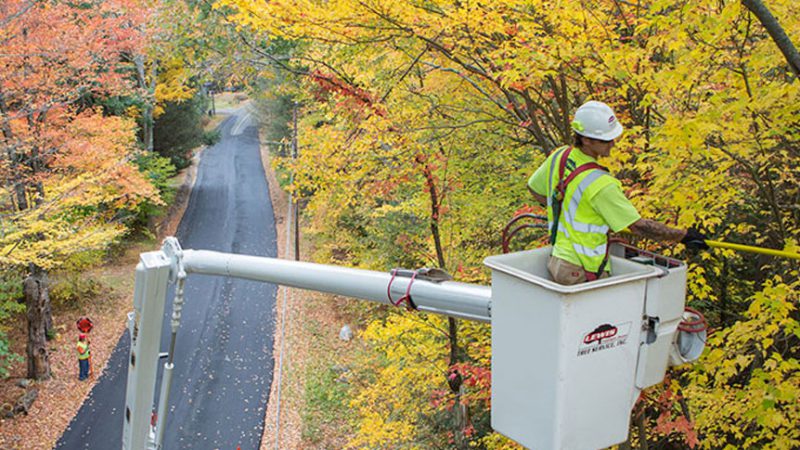
Pruning for Clearance and Sightlines
Stop signs, range road signs, and intersection approaches lose their function the moment vegetation grows in front of them. Restoring sightlines is one of the most direct safety improvements a county can make on its road network. We target growth around signage, at corner cuts, and along approach zones so signs are visible from the distance drivers need to react, and so cross traffic can be seen well before a vehicle reaches the intersection.
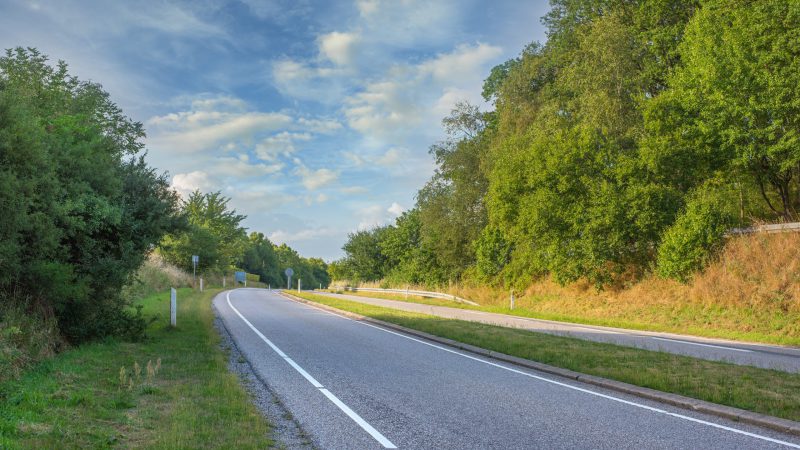
Ditch and Backslope Brushing
Ditches do not drain when they are full of willow, dogwood, and second-growth poplar. Keeping ditches and backslopes brushed maintains drainage function, reduces ice buildup on the shoulder in spring, and improves access for grading and snow clearing crews. We work the full ditch profile where conditions allow, taking growth back to the toe of the backslope so the next maintenance cycle has somewhere to start from.
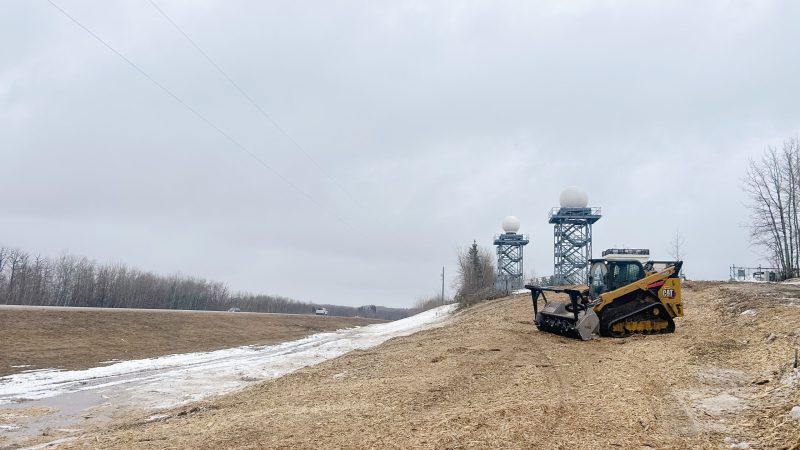
Mechanical Clearing
On long stretches of range road where the volume or density of brush makes hand cutting inefficient, mechanical clearing with equipment like forestry mulchers allows us to manage large areas effectively while minimizing ground disturbance. This is particularly valuable in remote sections of the county road network, heavily overgrown ditch lines, or areas where access and disposal options are limited.
Counties We Service
Sturgeon County, Strathcona County, Leduc County, Parkland County, Lamont County & Others
Safety on the Roadsides
Roadside vegetation work happens close to live traffic and often in challenging terrain. Our crews follow proper traffic accommodation practices, conduct pre-job hazard assessments, and maintain clear communication throughout every operation. Equipment and work methods are selected to minimize exposure to passing vehicles and to maintain controlled work zones even on narrow shoulders or in constrained ditch sections.
Where environmental sensitivity is a concern, including work near wetlands, watercourse crossings, or adjacent cultivated land, work methods are adapted to protect soil stability and surrounding vegetation. We do not treat every roadside the same, and we do not apply a standard approach where site conditions call for something different.