
Tree Inventory and Site Mapping for Edmonton Properties
If you manage a larger property, a commercial development, or a residential estate with a significant number of trees, making good decisions about tree care is a lot harder without accurate data. Which trees are in good shape? Which ones are developing structural issues? What needs attention this season versus what can wait? Without a proper inventory, you are working from memory and guesswork, and that tends to lead to reactive decisions that cost more than they should.
Site mapping and tree inventory gives you a clear, documented picture of your tree assets: where they are, what condition they are in, what risks they carry, and what they are going to need. It is the foundation for smarter maintenance planning, more accurate budgeting, and better conversations with contractors, engineers, and anyone else working on your site.
What We Assess and Record
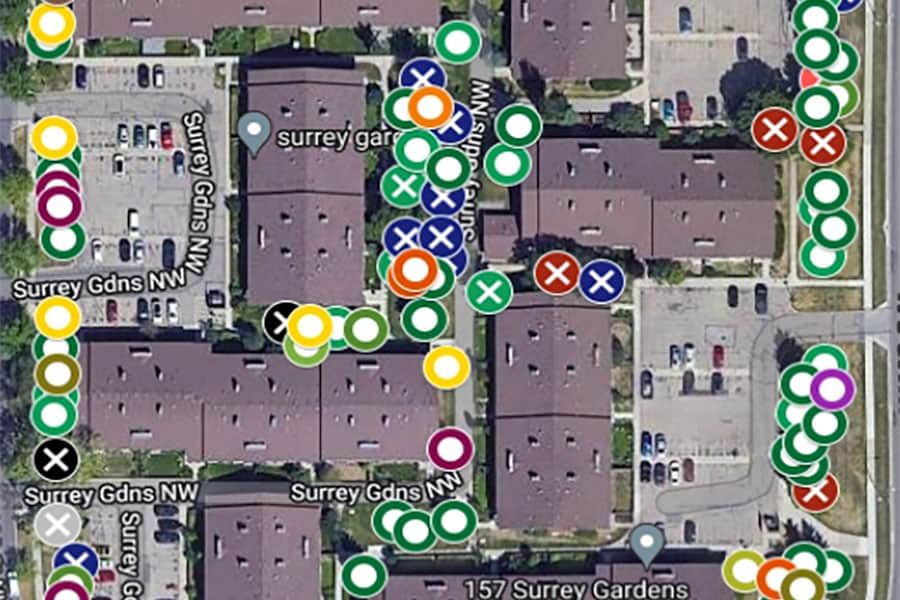
Every tree inventory starts with systematic field data collection across the property. Each tree is identified and recorded based on the attributes that actually matter for decision-making: species, size, overall condition, structural characteristics, and location. We also document site factors like proximity to buildings, sidewalks, roadways, utilities, and underground infrastructure, which puts the tree data in context and makes it genuinely useful for planning.
Structural integrity and risk indicators are assessed as part of the process. Identifying trees with defects, decay, or concerning growth patterns early means you can prioritize corrective action before a situation escalates into a safety hazard or an emergency call.
Clear Maps That Make Planning Easier
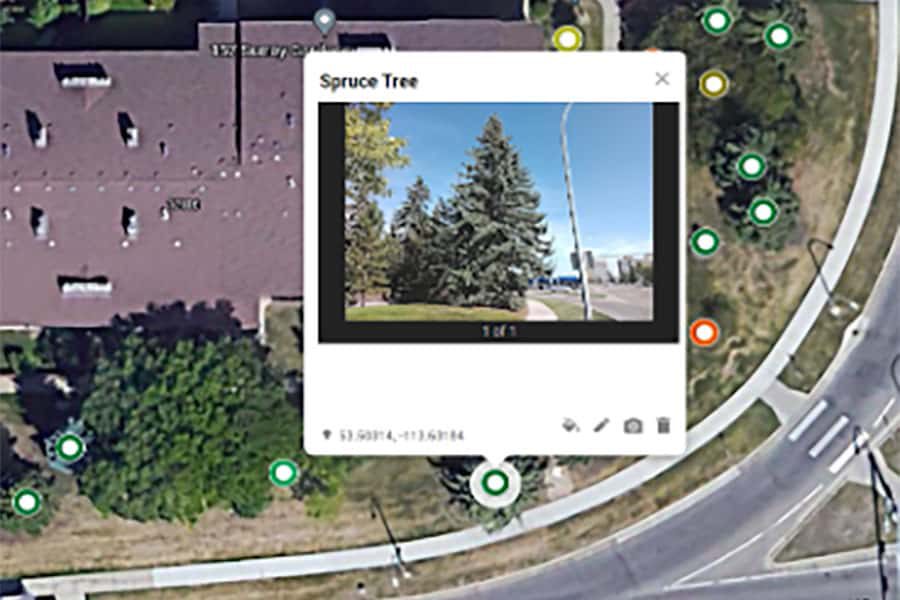
The data only becomes truly useful when it is mapped properly. Using modern mapping tools and digital field data collection, we create clear spatial records that show tree locations and key characteristics across your property. That spatial view supports efficient work planning, helps with route optimization for maintenance crews, and makes it much easier to coordinate with other trades working on the site.
For larger properties and commercial developments, accurate mapping reduces the kind of conflicts and costly surprises that happen when contractors and landscapers are working without reliable information about what is in the ground and overhead.
Better Data Means Better Decisions

Risk Management
Tree inventory data supports proactive risk management in a way that visual inspections alone cannot. When structural defects and decline trends are documented systematically, you can prioritize corrective actions based on actual risk rather than what happens to catch your eye on a given day. For properties with public access or high occupancy, this kind of documented due diligence is genuinely important from a liability standpoint.

Budgeting and Asset Management
Knowing the condition and expected maintenance needs of your tree population lets you forecast costs more accurately and allocate resources where they are actually needed. Inventory data can be updated over time to track changes in condition and risk, creating a living dataset that informs long-term planning rather than a one-time snapshot that goes stale.

Coordination With Other Professionals
Landscapers, engineers, architects, and contractors all benefit from accurate tree data when planning projects or working within existing landscapes. Providing that information upfront reduces conflicts, delays, and expensive changes mid-project. It is one of those things that seems like extra work until you see what happens on a site where it was not done.
Get a Tree Inventory and Site Map for Your Edmonton Property
Whether you manage a commercial development, a multi-unit property, a larger residential estate, or any site where knowing what you have matters, we can put together a clear, practical inventory that supports the way you actually use the information.
We serve Edmonton, Sherwood Park, St. Albert, Spruce Grove, Fort Saskatchewan, Leduc, Beaumont, and surrounding communities. Call 780-860-5500 or reach out online to discuss what your property needs.
Tree Inventory and Site Mapping FAQ
What size of property benefits from a tree inventory?
Generally speaking, the more trees you are managing and the more complex the decisions around them, the more value a formal inventory adds. Commercial developments, multi-unit residential properties, acreages with significant tree populations, and any site where trees interact closely with infrastructure or public access are all good candidates. For smaller residential properties with a handful of trees, a thorough assessment and a good maintenance plan may be more practical than a full formal inventory. We will tell you honestly which approach makes sense for your situation.
How is the inventory data delivered?
We provide clear site maps and documented records that are easy to read and actually useful for planning purposes, not just raw data files that require specialist software to interpret. The format can be tailored to how you plan to use it, whether that is for internal maintenance planning, reporting to stakeholders, coordination with other contractors, or integration into a broader asset management system.
How often should a tree inventory be updated?
It depends on the size of the property, how quickly conditions change, and how the data is being used. For most commercial and managed properties, an update every few years is a reasonable baseline, with targeted updates following significant events like storm damage, construction activity, or major removals. The goal is to keep the data accurate enough to be useful, which is different for every property. We can advise on a practical update schedule based on what you have and how you use the information.
Can a tree inventory help with an insurance claim or liability situation?
Yes, documented tree inventory data can be valuable in both contexts. For insurance purposes, having records that show a tree was assessed, monitored, and maintained appropriately supports your position if a claim arises from a tree-related incident. From a liability standpoint, a systematic inventory demonstrates due diligence in managing tree risk, which matters particularly on properties with public access, high foot traffic, or where trees are close to buildings and infrastructure.
Can the inventory be used by other contractors working on the site?
Absolutely, and this is one of the most practical benefits of having one. Landscapers, civil engineers, architects, and construction contractors all need to know what is in the ground and overhead when planning or executing work on a site. Providing accurate tree location and condition data upfront reduces the chance of conflicts, design changes, and unexpected costs mid-project. We have seen situations where a lack of this information caused real problems on site, and it is entirely avoidable.