
24-Hour Emergency Tree Response for Utility Clients
Storm damage does not wait for business hours. Neither does a tree failure that takes down a conductor, blocks a substation access route, or hangs over energized lines after a wind event. When vegetation creates an immediate threat to utility infrastructure or public safety, the response needs to be fast, disciplined, and executed by crews who know how to work safely in exactly those conditions.
At Trusty Tree Services, utility emergency response is a mission-critical service built on preparation, not improvisation. Our crews are trained for high-risk utility environments, our equipment is staged and ready, and our response protocols are defined well before an emergency call comes in. We serve utility clients across Edmonton and Alberta, mobilizing quickly to stabilize hazards, restore access, and support broader system recovery efforts.
Rapid Mobilization and Hazard Assessment
When we arrive on site, the first priority is understanding what we are actually dealing with. Our crews assess tree failures, hanging limbs, compromised root systems, downed or partially suspended debris, and any interactions with conductors, poles, or structures. Establishing controlled work zones and maintaining clear communication with utility representatives happens before any mitigation work begins.
Emergency conditions are dynamic. Hazards that look straightforward can change quickly, and our crews are trained to reassess continuously as work progresses. Controlled work zones stay in place, and communication stays open with utility operators and control centers throughout the operation.
Working Safely Under Pressure
Utility emergencies often happen in adverse conditions. Limited visibility, severe weather, time pressure to restore service, and the presence of energized infrastructure all compound the risk. Our technicians are trained to operate safely in exactly these environments, following strict utility safety standards at all times regardless of what the conditions are doing around them.
Pre-job briefings happen on every response, even urgent ones. Rushing a removal near energized infrastructure without a proper hazard assessment does not speed up the restoration. It creates new incidents. Our crews know that, and they work accordingly.
Techniques for Complex Emergency Removals
Controlled Dismantling and Rigging
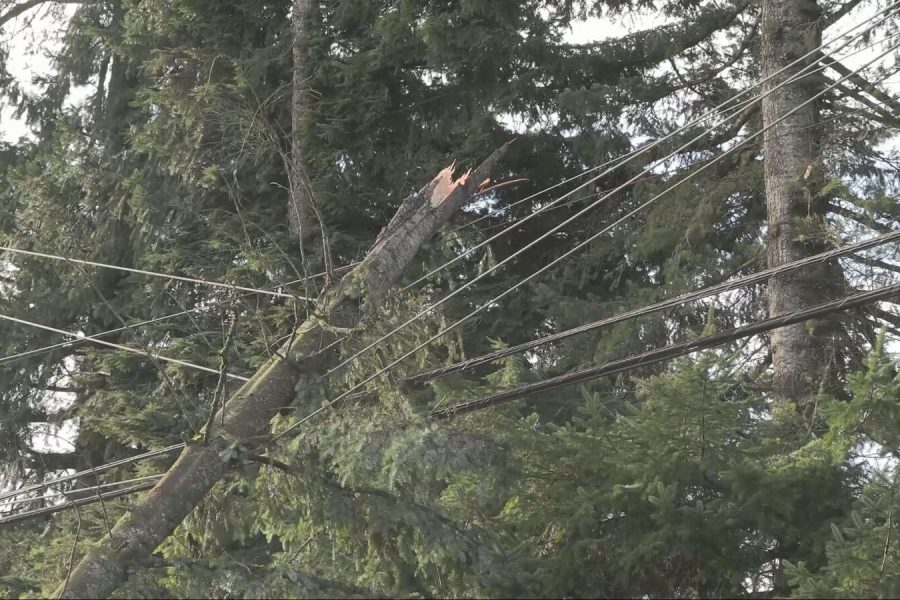
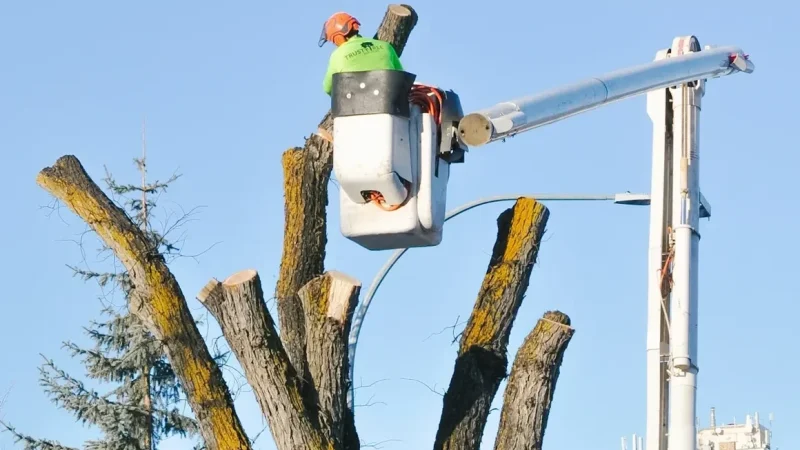
Trees or debris impacting conductors or structures rarely come out in a single clean cut. Partially failed stems, debris entangled in lines, and trees under tension all require controlled sectional dismantling with rigging systems engineered to manage the load precisely and prevent secondary damage to infrastructure. Our crews are trained in these techniques and apply them consistently in emergency conditions.
Crane-Assisted Operations
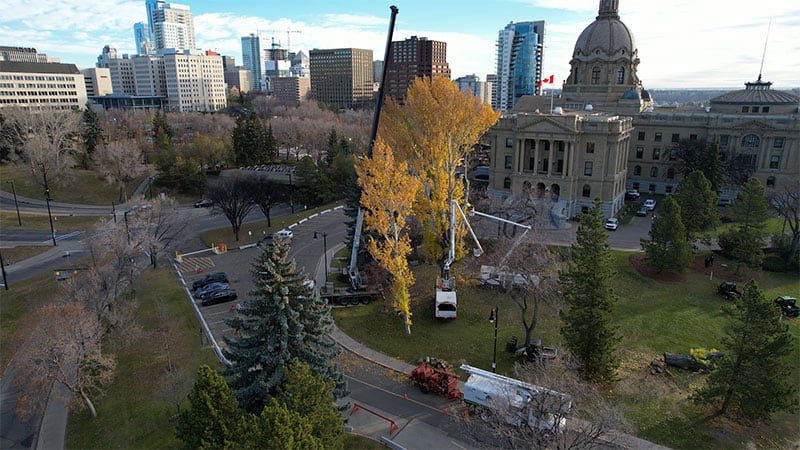
When the fall zone is constrained or the load needs to be moved away from infrastructure in a controlled direction, crane-assisted removal gives us that precision. The crane holds the load while cuts are made, allowing material to be lifted clear rather than dropped into a sensitive area. It is the right call when the stakes around the drop zone are too high to rely on rigging alone.
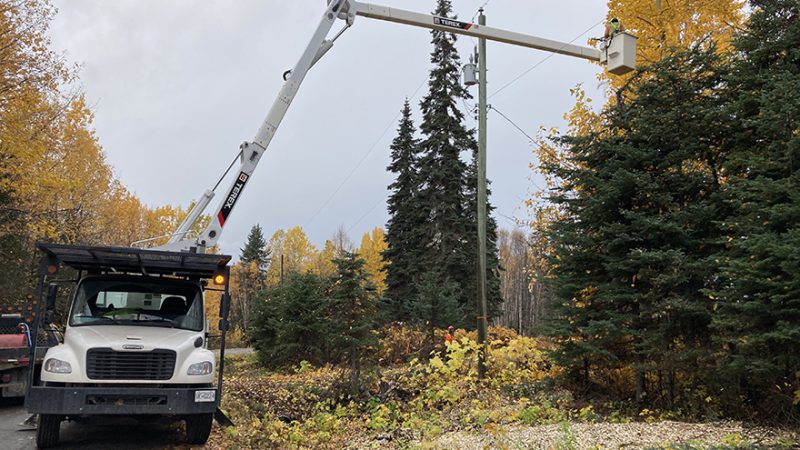
Aerial Lift Access
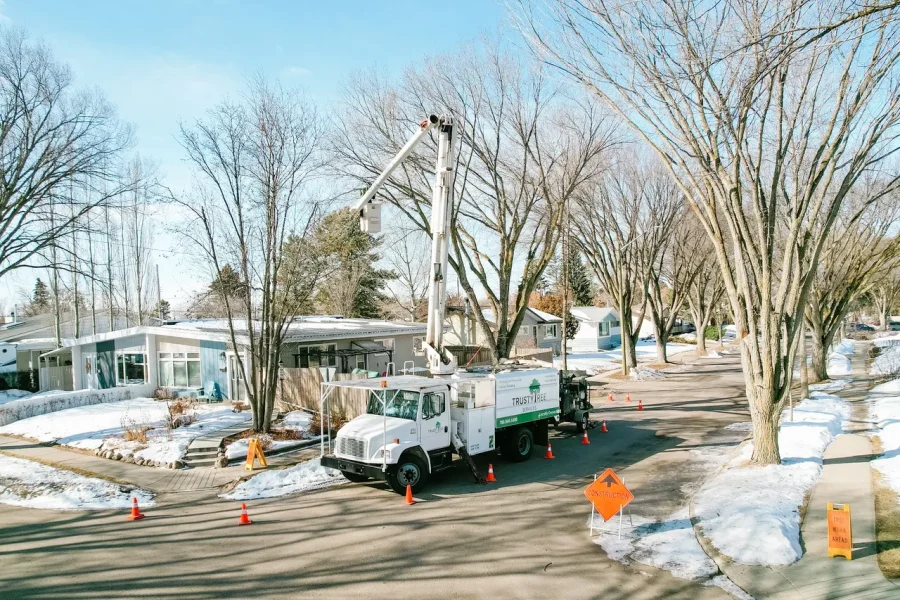
Bucket trucks and aerial lifts keep our crews out of compromised trees and in a stable, controlled work position. In emergency situations where structural integrity is uncertain and conditions are already high-risk, that separation matters. Aerial lift access reduces manual handling, improves precision, and allows our crews to work effectively even when climbing into the tree is not a safe option.
Equipment Ready for Utility Emergencies
Utility emergencies do not always happen beside a paved road. Our fleet includes bucket trucks, cranes, grapple trucks, and tracked machines that allow us to mobilize quickly and operate across urban corridors, rural rights-of-way, and remote access sites. Having the right equipment available and staged means we are not sourcing it after the call comes in. It is ready when we need it.
Coordination with Utility Operations
We work closely with utility operators, control centers, and prime contractors to prioritize hazards, sequence work efficiently, and support broader restoration efforts. Vegetation-related hazards need to be addressed in alignment with overall system recovery plans, not independently. Clear communication ensures our work fits into the bigger picture and does not create conflicts with other crews or operations on site.
Documentation After the Response
Even in an emergency, the paperwork matters. Completed work is recorded to support incident reporting, compliance requirements, and post-event reviews. Accurate documentation helps utility clients evaluate response effectiveness, identify gaps in their vegetation management program, and build stronger emergency preparedness strategies going forward. We provide clear records of what was done, where, and how.
Frequently Asked Questions
How quickly can you mobilize for a utility emergency?
We are set up to respond quickly. Our crews and equipment are staged and our response protocols are defined in advance, which means we are not organizing a response from scratch when the call comes in. Response time depends on location, the severity of the situation, and current deployment, but rapid mobilization is a core part of how we deliver this service. If you are a utility client looking to establish an emergency response agreement in advance, that is the most reliable way to ensure fast deployment when you need it.
Do you coordinate directly with utility control centers during a response?
Yes. Coordinating with utility operators and control centers is a standard part of our emergency response process. We align on site conditions, confirm whether lines are energized or de-energized, and sequence our work to support broader restoration efforts rather than working in isolation. That coordination keeps everyone safe and helps the overall response move more efficiently.
Can you handle trees that are partially fallen and entangled in lines?
Yes, and this is one of the more technically demanding scenarios in utility emergency response. Trees under tension, partially suspended debris, and material entangled in conductors require controlled dismantling with engineered rigging systems to manage the load and prevent secondary damage. Our crews are specifically trained for these situations and apply proven techniques to work through them safely.
What documentation do you provide after an emergency response?
We provide clear records of completed work including locations, methods used, hazards encountered, and scope of removal. This documentation supports incident reporting, insurance and compliance requirements, and post-event reviews. It also helps utilities assess whether the incident points to a gap in their vegetation management program that proactive work could address before the next event.
How is this different from your residential and commercial emergency response service?
The core commitment to safety and disciplined execution is the same. The difference is the environment and the stakes. Utility emergency response involves working near energized infrastructure, coordinating with utility operators and control centers, following strict utility safety standards, and supporting system-wide restoration efforts. Our utility crews are specifically trained for that environment in ways that go beyond standard tree care emergency response.