
Municipal Tree Risk Assessments for Edmonton and Surrounding Communities
When a tree fails in a public space, the question that follows is almost always the same: did anyone know it was a problem, and if so, what was done about it? A well-run tree risk assessment program answers both parts of that question before a failure happens. It identifies hazards early, creates a defensible record of the inspection, and drives corrective action through scheduled maintenance rather than emergency response.
At Trusty Tree Services, municipal tree risk assessments are conducted using a structured, consistent methodology that helps municipalities identify hazards, prioritize work, and demonstrate responsible stewardship of public tree assets. We work with municipal teams across Edmonton and Area, providing clear findings, practical recommendations, and documentation that supports long-term urban forestry planning and liability management.
How the Assessment Process Works
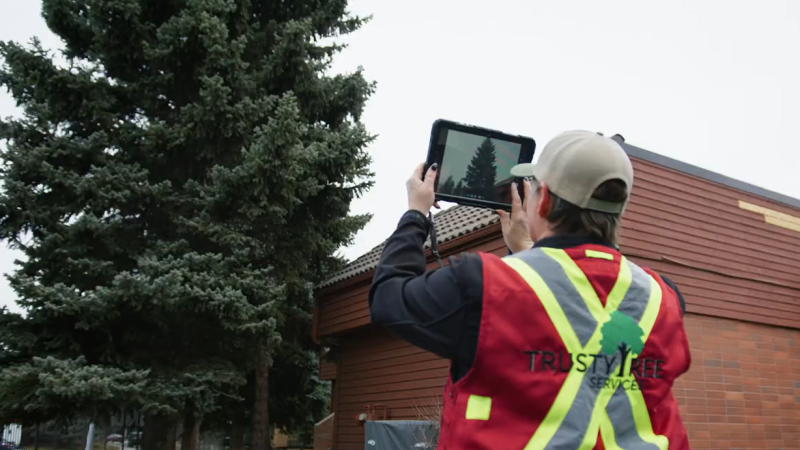
Assessments begin with systematic inspection of trees across the designated area, whether that is a single street, a park, a trail corridor, or a broader municipal zone. Each tree is evaluated for structural integrity, species characteristics, visible defects, decay indicators, root stability, canopy condition, and site factors that influence failure potential.
Environmental factors are also considered. Soil conditions, drainage, recent weather events, and site exposure all play a role in how a tree behaves under load and how likely it is to fail. A complete risk profile accounts for all of these, not just what is visible in the canopy.
Risk is Evaluated on Two Dimensions
Likelihood of Failure
The first dimension is how likely the tree, or a part of it, is to fail. This is assessed based on structural defects, decay presence and extent, root condition, lean, canopy weight distribution, and species-specific failure patterns. A tree can look healthy from the street and still carry significant structural risk if internal decay or root damage is present.
Consequences of Failure
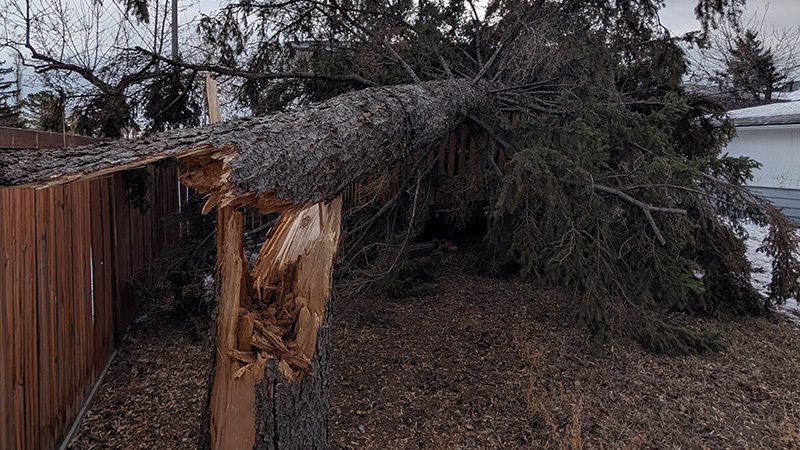
The second dimension is what happens if it does fail. A tree with moderate structural concerns in a low-traffic area carries very different risk than the same tree beside a playground or over a busy pedestrian corridor. Trees adjacent to high-traffic roadways, schools, trails, and public facilities are assessed with heightened attention because the exposure and consequence in those locations is highest. This risk-based approach is what allows municipalities to allocate resources where they matter most.
What Assessors Are Looking For
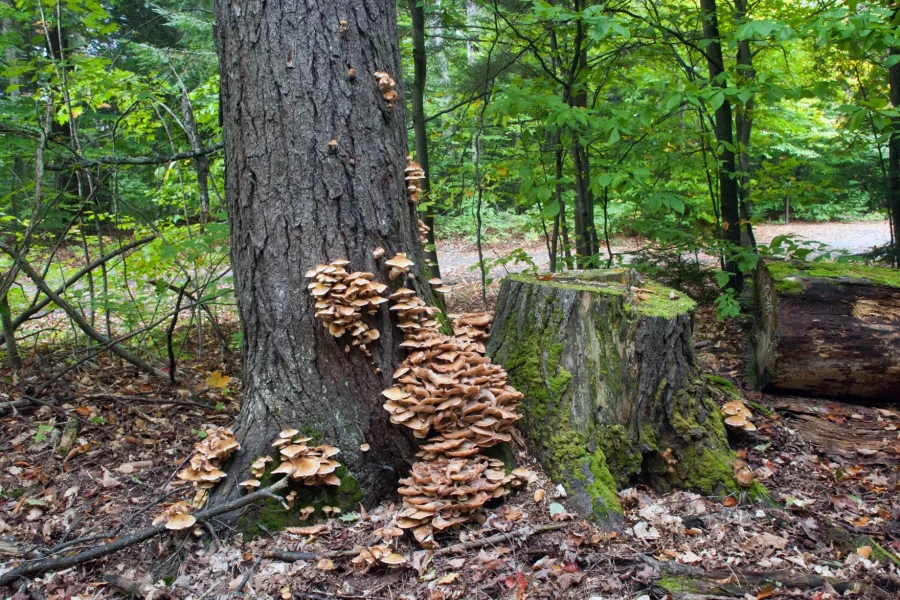
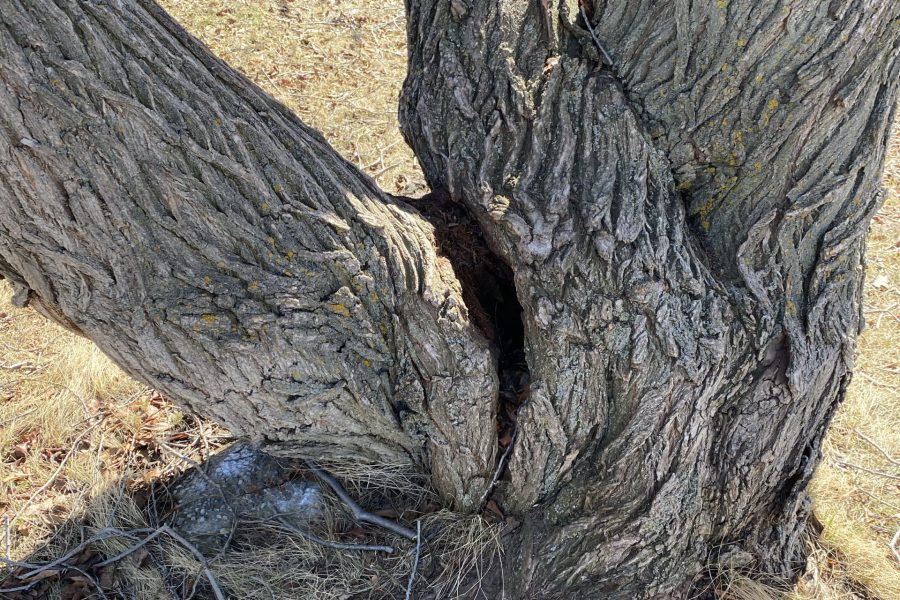
Our assessors are experienced in recognizing the defects and site conditions that indicate elevated risk, including co-dominant stems with included bark, crown dieback, fungal conks indicating decay, root plate disturbance, soil heaving, cankers, cracks, hangers, and species-specific vulnerabilities common in Alberta’s urban forest.
Findings are documented clearly with recommended actions ranging from continued monitoring through to pruning, mitigation measures, or removal where retention is not safely achievable. Recommendations are practical, prioritized, and aligned with municipal operational realities rather than theoretical best-case scenarios.
Supporting Proactive Maintenance Planning
One of the most valuable outcomes of a structured risk assessment program is the shift from reactive to proactive maintenance. By identifying developing issues early, municipalities can address concerns through scheduled work rather than emergency response. That reduces unexpected costs, improves budget predictability, and keeps the urban forest in better overall condition year over year. Assessment data integrated into a broader tree inventory creates a living dataset that improves with every inspection cycle.
Documentation That Supports Due Diligence
Clear, consistent documentation is what turns a tree inspection into a defensible record. Our assessment reports include findings, risk ratings, recommended actions, and inspection dates for each tree assessed. This documentation supports regulatory compliance, demonstrates responsible stewardship, and provides a clear record of what was known and what was done about it. For municipalities managing large public tree populations, that paper trail is not optional.
Frequently Asked Questions
How often should municipalities conduct tree risk assessments?
It depends on the population being managed and the risk profile of the site. High-use public spaces like parks, playgrounds, and busy pedestrian corridors benefit from more frequent assessment cycles. Lower-use areas can be assessed less often without meaningfully increasing risk. After significant weather events, targeted post-storm assessments of affected areas are also important. A consistent annual or biennial program for higher-risk locations is a reasonable baseline for most municipalities.
What is the difference between a tree risk assessment and a general tree inspection?
A general inspection looks at tree condition and health. A tree risk assessment goes further, evaluating both the likelihood of failure and the consequences if a failure occurs, then combining those factors into a risk rating that drives prioritization. The risk assessment methodology produces a defensible, documented finding that supports due diligence and liability management in a way that a general condition inspection does not.
Can a tree that looks healthy from the street still be a hazard?
Absolutely. Internal decay, root damage, and structural defects at branch unions are not always visible from the ground or from a distance. A tree can have a full, healthy-looking canopy while carrying significant structural risk at the base or in the trunk. This is exactly why trained assessors with experience recognizing subtle indicators matter. Surface observations alone are not sufficient for a credible risk assessment.
How do assessment findings get turned into a work plan?
Assessment findings are prioritized by risk level, with imminent hazards flagged for immediate action and lower-priority concerns scheduled into upcoming maintenance cycles. The documentation we provide is structured to support exactly this kind of planning, giving municipal staff a clear picture of what needs to happen, in what order, and what can wait for a scheduled maintenance program. It feeds directly into budgeting and work planning rather than sitting as a standalone report.
How does a formal risk assessment protect the municipality if a tree failure leads to a claim?
A formal assessment creates a documented record that the tree was inspected, the condition was evaluated, a risk rating was assigned, and a recommended action was identified. If the recommendation was acted on, that demonstrates due diligence. If the tree was assessed as low risk and failed unexpectedly, the documentation shows the municipality exercised a reasonable standard of care. Either way, having that record is significantly better than having no inspection history at all.