
Hazardous Tree Removal Near Utility Infrastructure
A tree with a severe lean, active decay, or storm damage is a problem on any property. Near energized overhead lines, poles, or substations, it becomes a public safety emergency. The consequences of a failure near utility infrastructure are not limited to property damage. They can mean outages, downed conductors, and serious risk to anyone in the fall zone.
At Trusty Tree Services, hazardous tree removal for utility clients is not treated as a reactive cleanup job. It is a high-consequence operation that gets the same level of planning, safety discipline, and equipment deployment that the risk demands. We work across Edmonton and Alberta removing trees that threaten utility infrastructure, following strict protocols and coordinating closely with utility operators every step of the way.
Risk Assessment Before Any Work Begins
Every hazardous tree removal in a utility environment starts with a detailed risk assessment. We evaluate tree condition, failure potential, fall zones, terrain, access constraints, and proximity to conductors and other infrastructure. Trees that sit outside standard right-of-way boundaries but still pose a credible risk to overhead lines get the same level of scrutiny as those directly beneath them.
That assessment drives everything that follows. It determines which removal method we use, what equipment gets deployed, what safety controls are required, and how we sequence the work to keep the risk predictable and contained from start to finish.
Working Safely Near Energized Lines
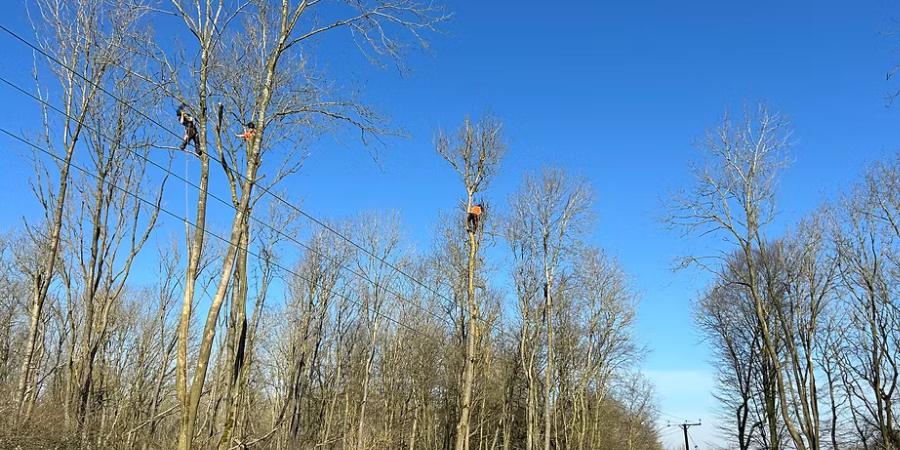
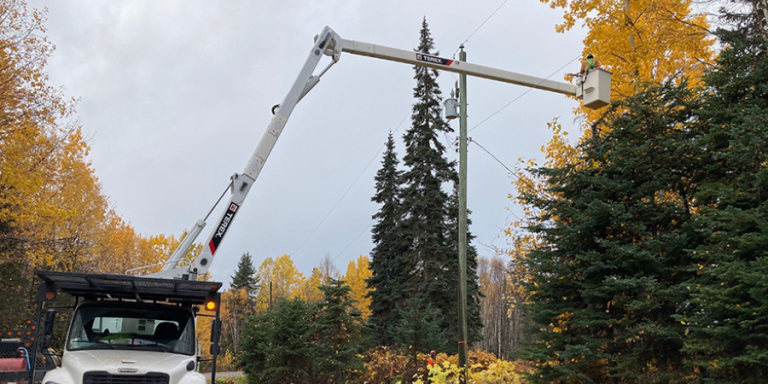
Working near energized infrastructure requires more than general tree care experience. Our technicians are trained specifically for utility environments, maintaining required minimum approach distances and following approved work practices on every job. There are no exceptions and no improvised shortcuts when energized lines are involved.
Pre-job briefings and hazard identification are mandatory before any crew starts work. Where site conditions require it, we coordinate directly with utility representatives to align on site-specific requirements and operational constraints before a single cut is made.
Removal Methods Built for High-Risk Environments
Controlled Sectional Dismantling
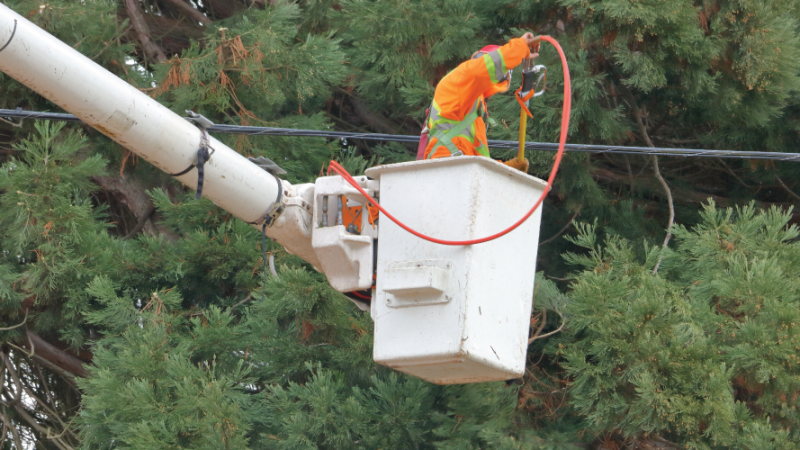
When a tree cannot be felled in a single drop, our crews dismantle it in sections from the top down. Rigging systems are engineered to control each load precisely and prevent uncontrolled movement toward conductors or infrastructure. This approach is used when fall zones are constrained, when lines are close, or when the tree’s condition makes a single felling operation unpredictable.
Crane-Assisted Removal
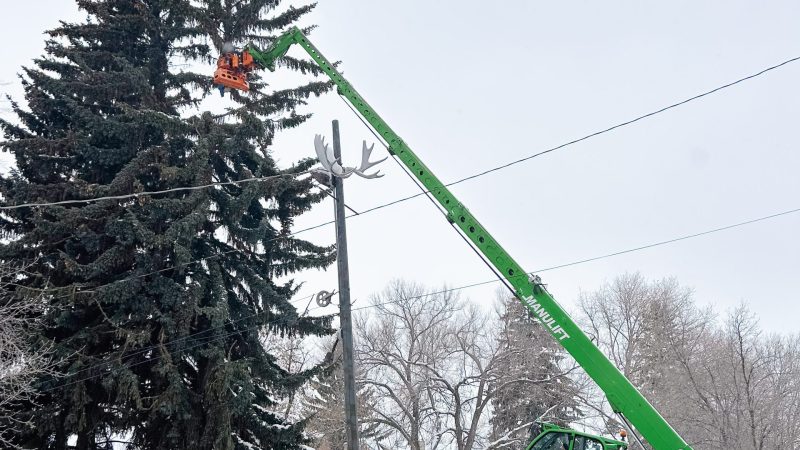
For trees where sectional dismantling alone is not sufficient to manage the risk, crane-assisted removal gives us a higher degree of control over how material is moved. The crane holds the load while cuts are made, allowing us to direct where each section lands rather than relying entirely on rigging from within the tree. It is the right tool when the stakes around a drop zone are especially high.
Aerial Lift Access
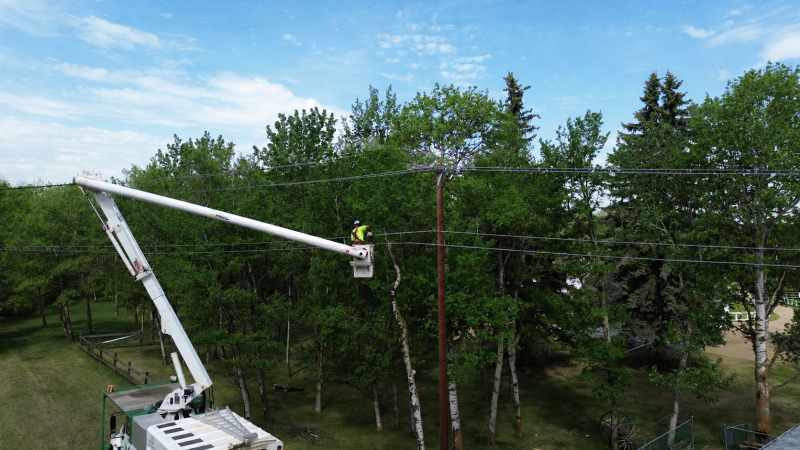
Bucket trucks and aerial lifts give our crews stable, controlled access to the canopy without the need to climb into a compromised tree. For hazardous trees where the structural integrity is uncertain, keeping personnel out of the tree entirely is the safer option. Aerial lift access reduces manual handling, improves control, and keeps our crews in a predictable work position throughout the operation.
Equipment for Utility Hazardous Removal
Hazardous trees near utility infrastructure often need to be dealt with quickly and in locations that are not easy to access. Our fleet includes bucket trucks, cranes, grapple trucks, and tracked machines, allowing us to mobilize efficiently and operate effectively across urban corridors, rural rights-of-way, and remote access sites. The right equipment reduces manual handling, minimizes the risk of secondary damage, and keeps the operation moving safely.
Documentation and Reporting
Every hazardous removal is accurately recorded to support compliance, asset management, and vegetation management planning. Clear documentation helps utility clients demonstrate due diligence and proactive risk mitigation to regulators and stakeholders. Where material can be processed on site through chipping or mulching, we do it that way to reduce hauling and minimize site impact. Work areas are stabilized and left in safe condition before we leave.
Frequently Asked Questions
How do you determine if a tree outside the right-of-way still needs to be removed?
Location relative to the right-of-way is only one factor. We assess the tree’s condition, lean, decay presence, failure potential, and fall zone to determine whether it poses a credible risk to overhead lines or infrastructure if it fails. A large tree with significant lean and visible decay outside the right-of-way can present just as much of a threat as one directly beneath the conductors, and it gets evaluated accordingly.
What happens if a tree needs to be removed urgently to prevent an outage?
We are equipped to mobilize quickly for urgent situations. Our crews and equipment are ready to respond when hazardous trees require prompt action to prevent outages or service disruptions. Even under time pressure, our pre-job briefing and hazard assessment process does not get skipped. Rushing a removal near energized infrastructure without proper planning creates more risk, not less.
Do you coordinate with the utility before starting work near energized lines?
Yes, always. When site conditions require it, we coordinate directly with utility representatives before work begins to align on site-specific requirements, operational constraints, and any line de-energization or protection measures needed. Working near energized infrastructure without that alignment is not something we do.
How is debris handled after a hazardous removal near infrastructure?
Where feasible, material is processed on site through chipping or mulching to reduce truck traffic and site impact. Larger material can be hauled to approved facilities. The approach depends on site access, terrain, and the volume of material involved. Either way, the work area is stabilized and left in safe condition before we clear out, and everything is documented for the project record.
Can you access hazardous trees in remote or difficult terrain?
Yes. Our tracked equipment is built to operate on soft soils, uneven ground, and steep terrain where conventional vehicles cannot reach. Hazardous trees do not always sit beside a maintained road, and our fleet is set up for exactly those situations. We assess access as part of the initial risk assessment so the right equipment is staged before the crew arrives on site.