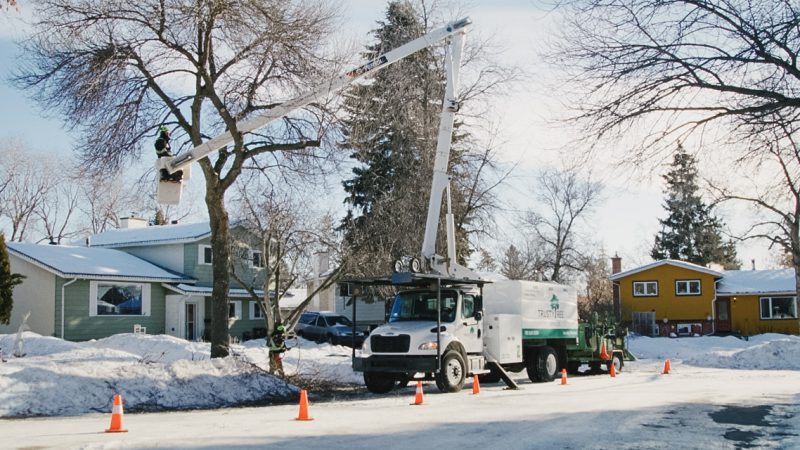
Urban Forestry Maintenance for Edmonton and Surrounding Municipalities

Municipal trees do a lot of work. They shade streets and parks, support stormwater management, improve air quality, and contribute to the kind of community character that residents notice and value. They also interact closely with roads, sidewalks, utilities, and buildings in ways that require consistent, proactive management to keep them safe and functional over the long term.

At Trusty Tree Services, urban forestry maintenance for municipalities is delivered as an ongoing partnership rather than a series of one-off jobs. We work with municipal teams across Edmonton and Edmonton and Area to keep public tree populations healthy, structurally sound, and properly maintained, balancing risk management, clearance requirements, tree health, and public expectations through disciplined planning and consistent execution.

Proactive Planning Over Reactive Response

Municipal tree populations are diverse in age, species, condition, and location. Managing them reactively, waiting for complaints or failures before acting, is expensive and puts the public at unnecessary risk. Proactive maintenance means assessing tree condition and structural integrity, identifying clearance issues, and scheduling work before problems escalate into hazards or emergency calls.

Our crews assess trees against their surroundings, looking at what clearances need to be maintained, what structural concerns need to be addressed, and what the priorities are across a given area or maintenance cycle. That assessment drives a logical work plan that lets municipalities allocate resources efficiently rather than scrambling to respond to what is in front of them.

What Urban Forestry Maintenance Covers
Routine Pruning
Routine Pruning

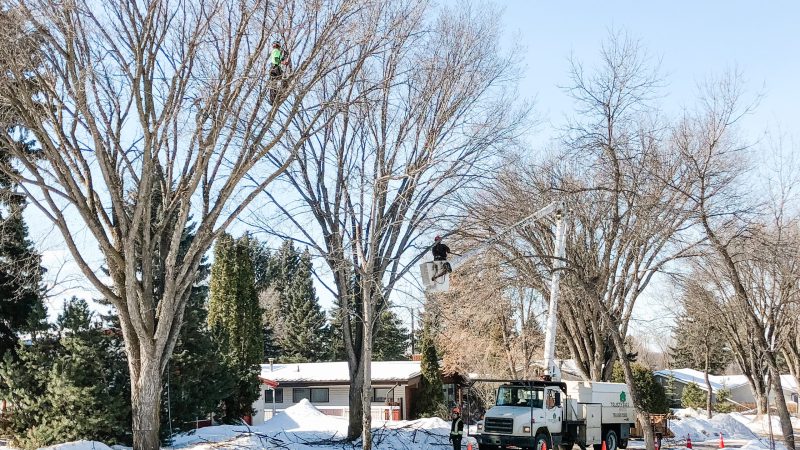
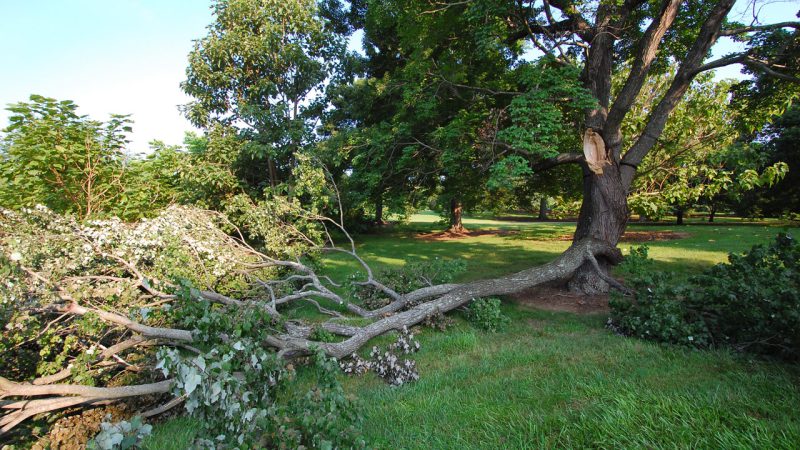
Proper pruning is the foundation of any urban forestry program. It improves tree structure, reduces the likelihood of branch failure, and maintains required clearances over roadways, sidewalks, signage, and lighting. Our technicians apply arboricultural best practices on every job, using directional and structural pruning techniques to reduce future conflicts and extend maintenance cycles rather than just cutting back to a clearance distance and returning in two years to do it again.
structural-pruning-defective-branch-failure_medium

Risk Management and Hazard Mitigation
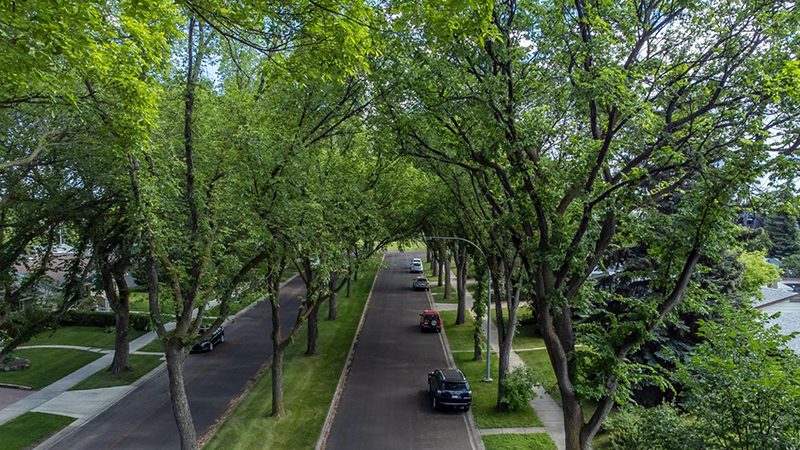
Trees in public spaces carry inherent liability if defects and hazards are not identified and addressed in a timely way. Our maintenance programs focus on finding those issues through proactive inspections and corrective action, whether that means targeted pruning, cabling, or removal where retention is not a safe option. This approach supports due diligence and helps municipalities demonstrate responsible stewardship of their public tree assets.
Boulevard-Trees-Maintained-800x494

Clearance Maintenance

Trees growing over roads, sidewalks, and public infrastructure need to maintain required clearances for vehicle traffic, pedestrians, signage, and lighting. When clearance pruning is done correctly, it maintains those standards without compromising tree health or creating structural problems that lead to more work down the road. We work to meet municipal clearance standards while keeping trees healthy and stable for the long term.
City Tree Pruning

Community Presentation and Streetscape Quality

Well-maintained trees contribute directly to how a community looks and feels. Clean, healthy streetscapes and parks reflect positively on the municipality and matter to residents. Our crews work professionally and respectfully in public spaces, maintaining clean worksites and minimizing disruption to residents, traffic, and daily operations while delivering consistent results.

Working in Public Spaces

Municipal work happens in front of people. Residents, commuters, cyclists, and business owners are all watching, and how a crew conducts itself in a public space matters as much as the quality of the work itself. Our teams are trained to operate professionally in high-visibility environments, coordinating with municipal staff on traffic management plans, work scheduling, and site-specific requirements to minimize disruption while getting the work done safely.

Coordination and Documentation

We work closely with municipal forestry and public works staff to align maintenance activities with work schedules, seasonal considerations, and operational requirements. Clear records of completed work support internal reporting, asset management, budgeting, and long-term urban forestry planning. Municipalities get a reliable partner who shows up consistently, communicates clearly, and documents everything properly.

Frequently Asked Questions

How do you prioritize maintenance across a large municipal tree population?

Prioritization starts with condition and risk. Trees in high-use public spaces with structural concerns or clearance issues get addressed first. From there, we work through maintenance cycles based on species, age, location, and the municipality’s operational priorities. Having a current tree inventory and condition data makes this process significantly more efficient. If that data does not exist yet, our inventory and mapping service can build the foundation.
In Alberta, late winter and early spring before leaf-out is generally the ideal window for structural pruning. Trees are dormant, defects are easier to see without foliage, and the risk of disease transmission through fresh wounds is lower. That said, hazard pruning and clearance work get done year-round when safety requires it. Elm trees in Edmonton are subject to Dutch elm disease regulations that restrict pruning to outside the April 1 to August 31 window, which is an important scheduling consideration for municipal programs.
Proactive maintenance catches structural problems, disease, and clearance issues before they become expensive emergencies. A branch failure over a road or sidewalk can mean injury liability, infrastructure repair, and emergency response costs that far exceed what routine pruning would have cost. Consistent maintenance also extends tree life, reduces removals, and supports the long-term value of the urban forest rather than cycling through repeated plant-and-remove programs.
Yes. Working in active public environments is standard for our municipal crews. We coordinate traffic accommodation measures, sidewalk management, and work zone setup in alignment with municipal standards and site-specific requirements. Scheduling is planned around peak traffic periods where possible, and communication with municipal departments ensures operations integrate smoothly with other activity in the area.
Yes. Clear records of completed work, including locations, scope, and any observations about tree condition, are provided as a standard part of our municipal service delivery. This documentation supports internal reporting, budgeting, and long-term urban forestry planning. For municipalities looking to build a more comprehensive picture of their tree assets, our tree inventory and mapping service integrates directly with ongoing maintenance programs.