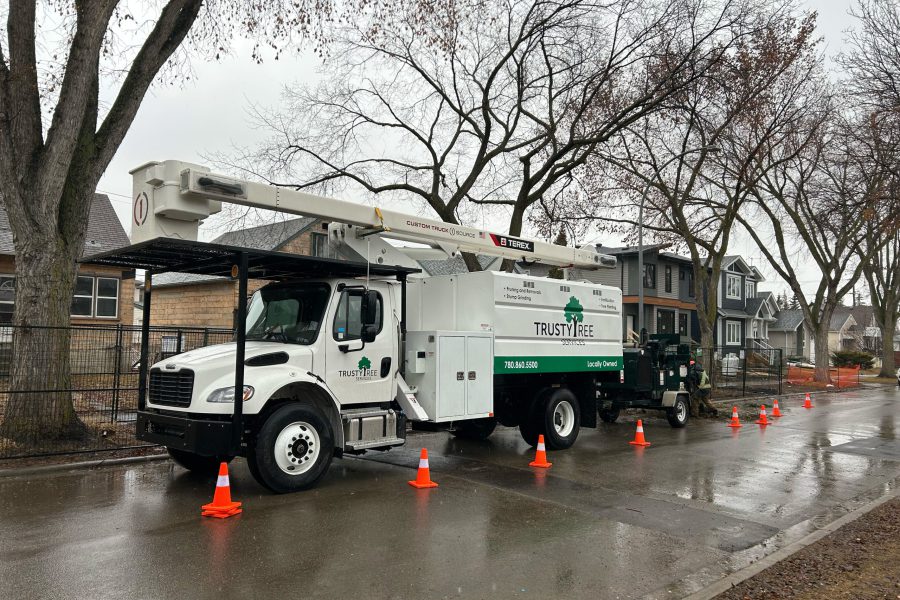
24-Hour Municipal Emergency Tree Response Across Edmonton and Area

Storms do not follow business hours, and neither do tree failures in public spaces. A tree across a road, a large limb over a playground, or a root failure threatening a utility connection can happen at any hour and requires a fast, organized response. In a municipal environment, the stakes are especially high. The public is watching, roads need to open, and the municipality’s ability to protect its residents is being measured in real time.

At Trusty Tree Services, municipal emergency response is a mission-critical service built on preparation, defined protocols, and crews who know how to work safely and professionally in public spaces under pressure. We serve municipalities across Edmonton and Area, mobilizing quickly to stabilize hazards, restore access, and return public spaces to safe, functional condition.

On-Site Hazard Assessment First
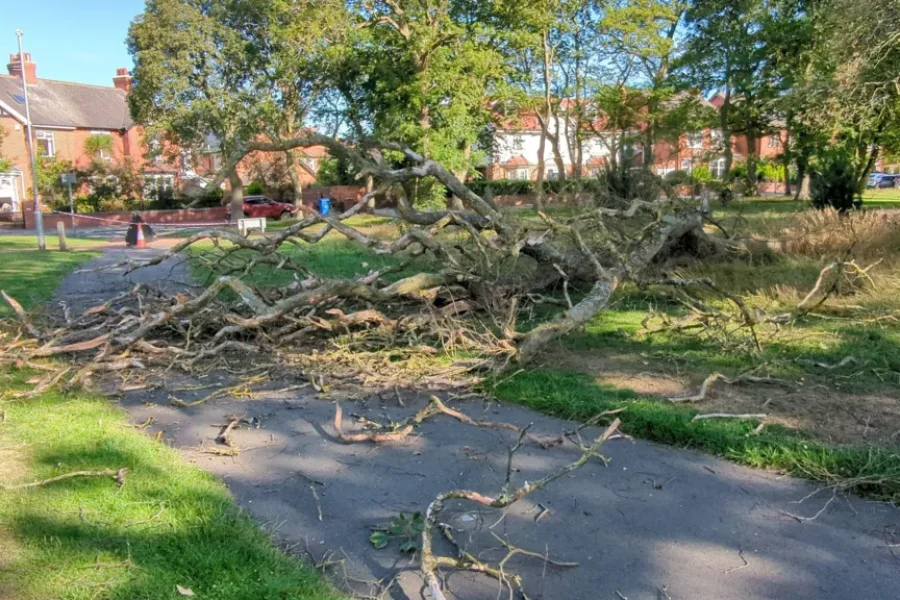
When our crews arrive, the first order of business is understanding what they are dealing with. Tree failures, hanging limbs, compromised root systems, blocked roadways, and interactions with utilities or public infrastructure all get evaluated before any cutting starts. Establishing controlled work zones, traffic accommodations, and pedestrian safety measures are immediate priorities to protect the public and municipal staff before mitigation work begins.
Emergency conditions change. What looks stable can shift as work progresses, and our crews are trained to reassess continuously and adjust their approach. The work zone stays controlled and communication stays clear from arrival to cleanup.
park fail
Emergancy Response

Keeping the Public Safe During the Response

Municipal emergencies happen in front of people. Residents, drivers, and pedestrians are often present and watching while the work is being done. Proper work zones, clear signage, and professional crew conduct are not extras in this environment. They are part of the job. Our teams are trained to operate visibly and professionally in public spaces, managing the safety of the scene while keeping the response moving efficiently.
Where lane closures, sidewalk barriers, or traffic accommodation measures are required, they are set up correctly and maintained throughout the operation. Public-facing professionalism during an emergency reflects directly on the municipality, and we take that responsibility seriously.

Techniques for High-Consequence Public Space Removals
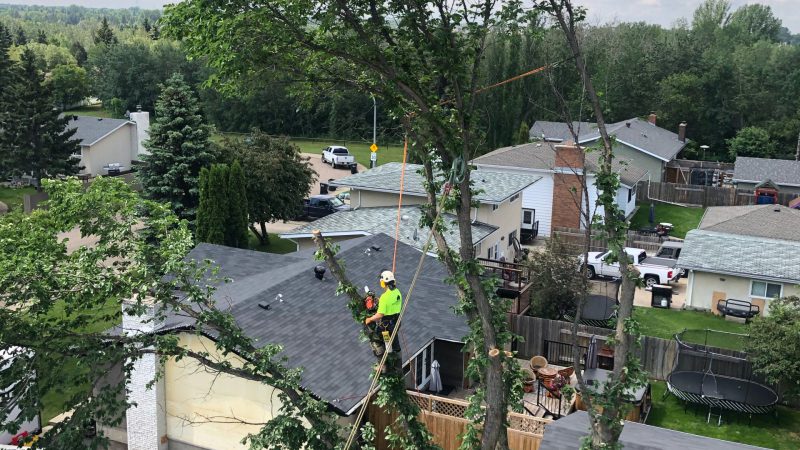
Controlled Rigging

Controlled Rigging and Sectional Dismantling
Most emergency removals in urban public spaces cannot be felled in a single drop. Roads, sidewalks, parked vehicles, and surrounding infrastructure in every direction mean the tree comes down in controlled sections. Our crews use proven rigging systems to manage each load precisely, protecting the surrounding environment and keeping the work zone predictable throughout the removal.
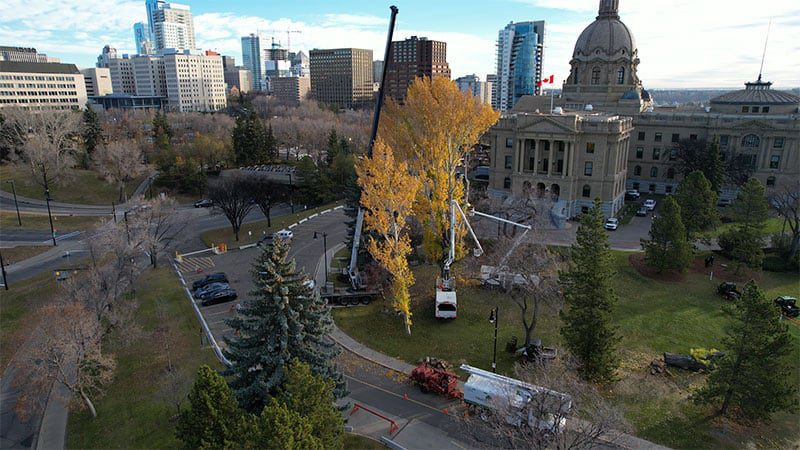
Municipal-Emergency-Photo-5

Crane-Assisted Operations

When the fall zone is too constrained or the load needs to be moved in a specific direction to avoid damaging infrastructure, a crane gives us that precision. Material is lifted clear rather than dropped, which matters when a road needs to reopen quickly or when infrastructure is close on all sides. Crane-assisted removal is the right call when the stakes around the drop zone are too high to rely on rigging alone.
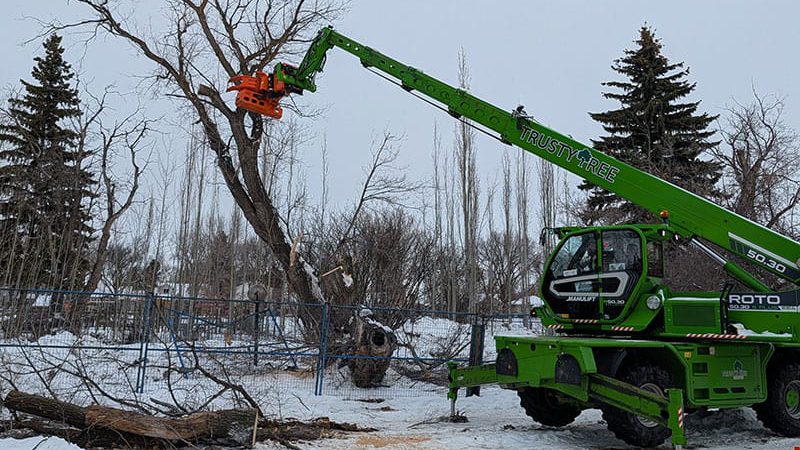
Municipal-Emergency-Photo-6

Aerial Lift Access

Bucket trucks keep our crews out of structurally compromised trees and in a stable, controlled position. In emergency situations where a tree’s condition is uncertain and the risk is already elevated, that separation matters. Aerial lift access also improves efficiency in high-traffic public locations where minimizing time in the work zone is important for getting roads and pathways back open.

Equipment for Municipal Emergency Response

Our fleet includes bucket trucks, cranes, grapple trucks, and chippers, giving us the capability to respond effectively across a range of emergency scenarios, from a single limb over a sidewalk to a large tree across a primary roadway. Equipment is staged and ready rather than sourced after the call comes in, which is part of what makes rapid mobilization actually rapid.

Coordination with Municipal Departments

We work closely with public works, transportation, parks, and emergency management teams to prioritize hazards, restore access routes, and support broader incident response efforts. Vegetation-related emergencies rarely happen in isolation. A tree across a road affects transit, emergency services, and adjacent properties all at once. Coordinating with the right departments ensures our response fits into the bigger picture and does not create conflicts with other crews on site.

Cleanup, Documentation, and Follow-Up

The response is not finished when the tree is down. Debris is chipped, hauled, or secured as appropriate to eliminate ongoing hazards and restore site functionality. Where necessary, temporary stabilization measures are put in place for any remaining trees or structures that need follow-up work. Completed work is documented to support incident reporting, insurance requirements, and post-event reviews, and to help municipalities identify whether the incident points to a gap in their proactive maintenance or risk assessment program.

Frequently Asked Questions

How quickly can you respond to a municipal tree emergency?

We are set up for rapid mobilization with crews and equipment staged and response protocols defined in advance. Response time depends on location, the nature and severity of the situation, and current deployment, but fast response is a core part of how this service works. Municipalities with established service agreements get priority response as part of that relationship, which is the most reliable way to ensure rapid deployment when an emergency hits.
Yes. Restoring access is often the primary goal in a municipal emergency response. Our crews are equipped and trained to work efficiently in active transportation corridors, using the right combination of techniques and equipment to clear hazards and reopen roads as quickly as safely possible. Traffic accommodation measures are set up to manage the scene while work is underway, and we coordinate with transportation and public works teams to sequence the work in alignment with their priorities.
Partial failures are assessed carefully on arrival. A partially failed tree is often under tension and unpredictable, which makes it one of the more technically demanding scenarios in emergency tree work. Our crews evaluate the remaining structure, the load distribution, and the fall zone before deciding how to proceed. In some cases, the remaining portion can be stabilized temporarily and addressed in follow-up work. In others, it needs to come down as part of the emergency response. The assessment on site drives that decision.
We provide clear records of completed work including location, scope, hazards encountered, techniques used, and any follow-up recommendations. This documentation supports incident reporting, insurance requirements, and post-event reviews. It also helps municipalities assess whether the event points to a pattern of unmanaged risk in their tree population that proactive maintenance or risk assessments could address before the next storm.
The core commitment to safety and disciplined execution is consistent across all our emergency work. The difference in a municipal context is the public environment, the coordination requirements, and the accountability that comes with working on behalf of a community. Traffic management, pedestrian safety, interdepartmental coordination, and public-facing professionalism are all built into how our municipal crews operate. It is not just tree work in a public space. It is a public service delivered under scrutiny, and we approach it that way.