
Forestry Mulching for Utility Right-of-Way and Access Corridors
Traditional vegetation clearing generates a lot of debris. It needs to be hauled, disposed of, and the ground underneath often ends up disturbed in the process. In utility corridors, remote access routes, and environmentally sensitive areas, that approach creates more problems than it solves. Forestry mulching does it differently.
At Trusty Tree Services, forestry mulching for utility clients is delivered as a strategic clearing method that processes trees, brush, and understory vegetation directly on site. The material gets converted into mulch and distributed evenly across the ground surface, eliminating the need for hauling, reducing soil disturbance, and leaving the corridor in better shape than a conventional clearing operation would. We work across Edmonton and Alberta on utility right-of-way, access routes, and corridor maintenance programs where efficiency and ground stability matter.
How Forestry Mulching Works
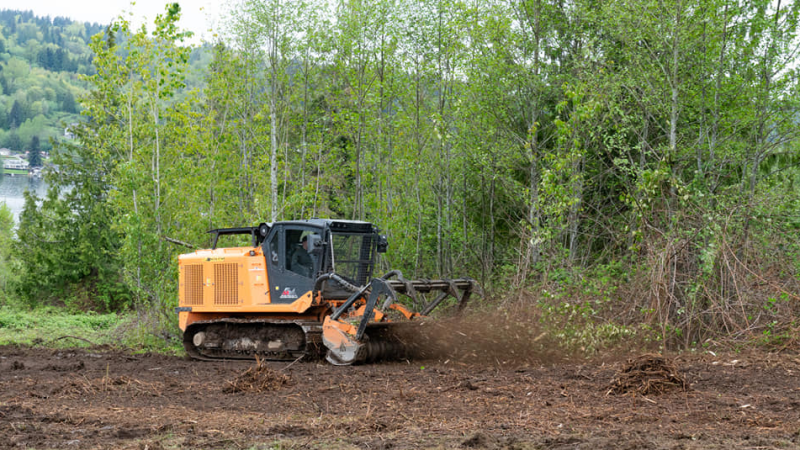
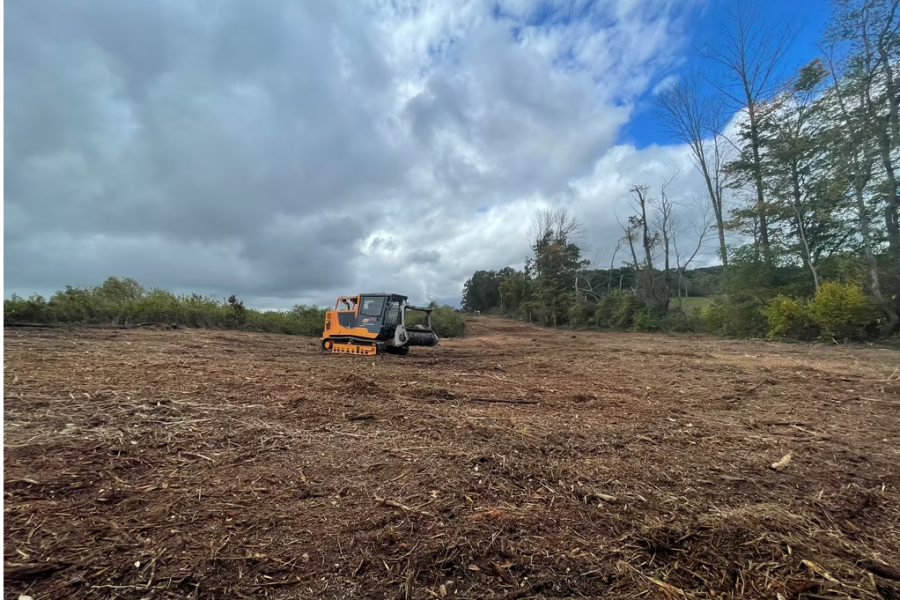
A forestry mulcher is a purpose-built machine fitted with a high-speed rotating drum that grinds trees, brush, and undergrowth down to ground level in a single pass. Unlike conventional clearing that cuts and piles, the mulcher processes everything on the spot, leaving a uniform layer of wood chip mulch across the treatment area. There is no debris pile to manage, no hauling required, and the mulch layer starts working for the corridor immediately.
Every project starts with an assessment of corridor conditions and objectives. Vegetation type and density, terrain, slope, soil conditions, and proximity to infrastructure all influence which equipment we use and how we sequence the work. We align with utility owners and project managers on treatment zones, desired outcomes, and access requirements before mobilization.
Why It Works Well in Utility Environments
No Hauling, Less Disruption
Processing material on site eliminates truck traffic in and out of the corridor. That matters in remote locations where haul routes are long, in environmentally sensitive areas where vehicle traffic needs to be minimized, and in urban corridors where repeated truck movements cause their own disruption. Less hauling also means lower fuel consumption and reduced emissions compared to conventional clearing.
Ground Stability and Erosion Control
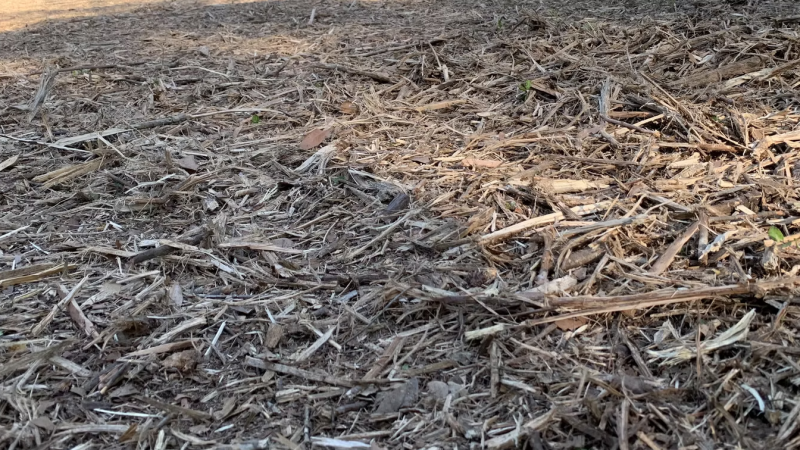
The mulch layer left behind after treatment does more than just cover the ground. It suppresses regrowth, retains moisture, and reduces erosion by protecting soil structure from rain and runoff. In corridors where slope or soft soils make erosion a real concern, that layer of mulch is a meaningful benefit. It also promotes natural decomposition and soil enrichment over time, supporting long-term corridor stability.
Extended Maintenance Cycles
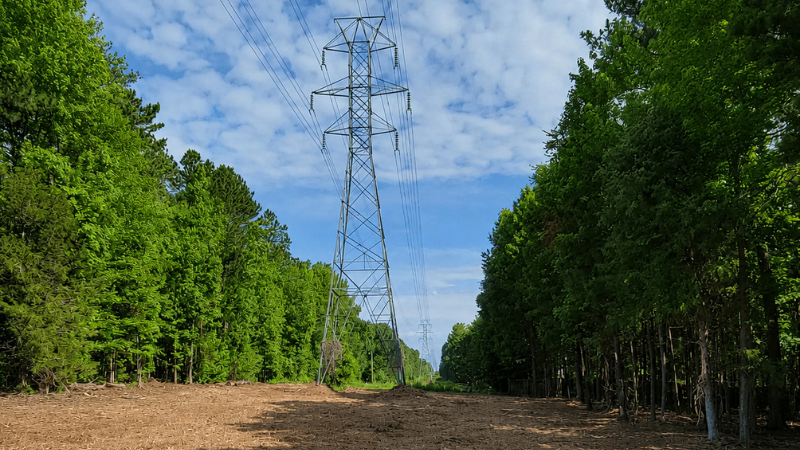
Mulching suppresses regrowth more effectively than cutting alone. The mulch layer limits light penetration and creates a physical barrier that slows the re-establishment of brush and understory vegetation. That means longer intervals between maintenance visits, which reduces overall program costs and improves the efficiency of inspection and maintenance crews operating in the corridor.
Better Access for Ongoing Operations
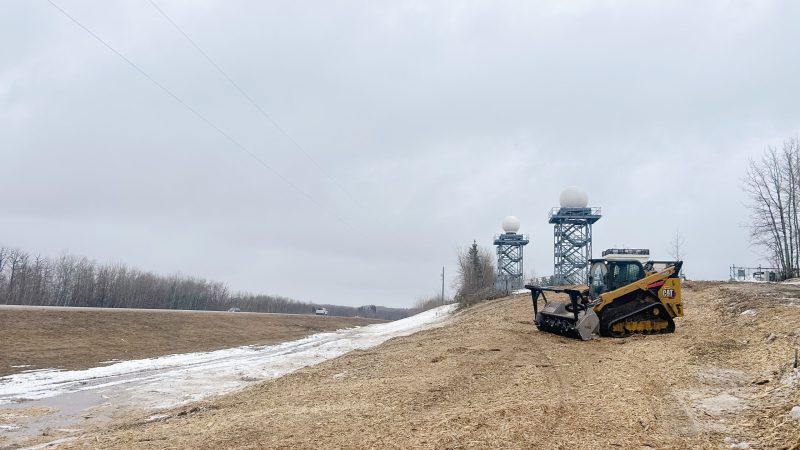
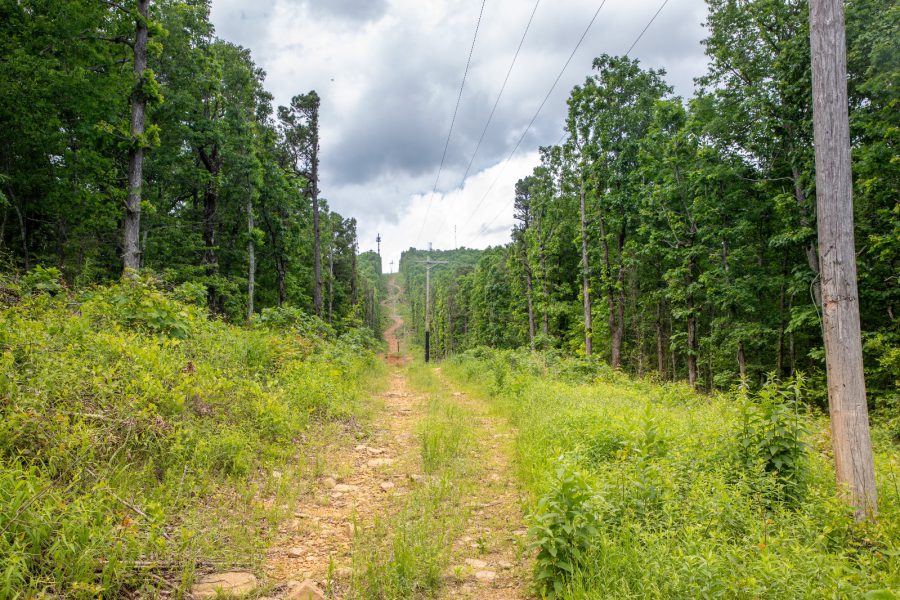
A mulched corridor is a cleaner, more accessible corridor. Inspection crews, emergency response teams, and maintenance vehicles can move through the right-of-way more easily when brush and undergrowth have been cleared to ground level. Maintaining clear access routes is one of the operational benefits that compounds over the life of a vegetation management program.
Equipment and Terrain Capability
We use high-capacity tracked mulchers that can handle a wide range of vegetation sizes and site conditions. Tracked machines operate effectively on uneven ground, steep slopes, and soft soils while keeping ground pressure low, which preserves soil structure and reduces the impact on the corridor surface. That capability is what makes forestry mulching practical in remote and difficult terrain where wheeled equipment would cause more damage than the clearing is worth.
Safety Near Energized Infrastructure
Mulching operations in utility corridors follow the same safety standards we apply across all utility work. Our crews conduct detailed pre-job planning to identify hazards, maintain appropriate clearances from energized infrastructure, and operate equipment to keep work zones controlled and predictable. Where proximity to lines requires additional coordination with the utility, that happens before equipment moves into the corridor.
Documentation and Coordination
Completed work is tracked and reported to support compliance, planning, and future maintenance scheduling. We work closely with utility stakeholders to ensure reporting aligns with their internal requirements and that performance across the program is measurable. Clear communication before, during, and after each project keeps everyone aligned and the program on track.
Frequently Asked Questions
What size of trees and brush can forestry mulching handle?
Our high-capacity mulching equipment can process a wide range of vegetation, from dense brush and saplings through to larger diameter trees depending on species and site conditions. The assessment we do before mobilization helps confirm the right machine for the vegetation type and volume on site. If a corridor has a mix of large-diameter trees and dense undergrowth, we may combine mulching with other removal methods to get the best result efficiently.
Does forestry mulching damage the soil or root systems of trees we want to keep?
When operated correctly, tracked mulchers have a low ground pressure footprint compared to conventional clearing equipment, which reduces soil compaction and disturbance. Operators can work with precision around trees designated for retention. That said, the assessment process identifies any trees or vegetation to be protected before work begins, and treatment zones are clearly defined so crews know exactly what gets mulched and what gets left.
How does the mulch layer affect regrowth?
The mulch layer suppresses regrowth by limiting light at the soil surface and creating a physical barrier that slows re-establishment of brush and understory vegetation. It is not a permanent stop to regrowth, but it meaningfully extends the time before the corridor needs attention again compared to cutting alone. Combined with selective removal of high-conflict species, mulching can significantly reduce return-cycle frequency over a long-term program.
Can you mulch in remote or difficult-to-access corridors?
Our tracked mulchers are built to operate on uneven terrain, soft soils, and steep slopes where wheeled equipment cannot safely work. Remote corridors are often where forestry mulching delivers the most value, since the elimination of hauling is especially significant when haul routes are long or access is limited. We assess terrain and access as part of the pre-job planning so the right machine is staged before we mobilize.
Is forestry mulching suitable for environmentally sensitive areas?
It is often the preferred method in sensitive areas precisely because it reduces disturbance compared to conventional clearing. On-site processing eliminates the need for hauling equipment to move repeatedly through the corridor. The mulch layer protects soil from erosion, retains moisture, and supports natural decomposition without introducing outside materials. Where specific environmental requirements apply, we adapt our approach accordingly and document our methods to support compliance reporting.