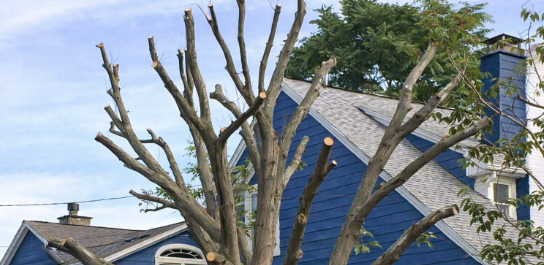
Tree topping – one of the most damaging practices, is often the most common request from homeowners to professional arborists. To reduce tree height and improve the view, the homeowners opt for tree topping. However, this is an unsafe practice. Tree topping weakens trees and creates hazards.
However, tree pruning is a more feasible option if you’re planning to reduce the height and clear the clutter. It involves strategically cutting the tree’s structure while ensuring its safety and health. With professional tree pruning in Edmonton, homeowners can maintain the structural integrity and health of their trees while reducing their size.
The Physiology of Topping: How Trees React
During topping, the upper crown of the tree is removed, and the large branches are cut back to stubs. From a biological standpoint, this is catastrophic. The crown contains most of the leaves, which are essential for photosynthesis. When the crown is removed, the tree begins to starve and is deprived of its energy source.
What happens next? The tree slips into survival mode and begins producing water sprouts. These are thin and weak, growing straight up from the cut points. This is not a recovery phase. These shoots are weak and poorly attached to the tree compared to the tree’s natural branches.
They grow quickly and lack structural strength. Thus, this is considered a crime against arboriculture. For tree branch removal in Edmonton, it is always wise to consult a professional arborist for pruning.
Long-Term Hazards: What are the serious consequences?
One of the most serious and unavoidable consequences of tree topping is internal decay. Large topping cuts are made, which makes it difficult for the tree to seal. They remain open, allowing moisture, fungi, and pests to enter the wood, causing decay.
Over time, this decay weakens the tree from the inside. The water spouts, which start growing from the cut points, are likely to attach to the decaying wood, which will fall during wind and storms, creating a significant risk to the property.
In an attempt to make the tree smaller, you’ll end up causing damage to people and property and incur high maintenance costs.
Aesthetics and value – How does it lower the curb appeal?
Beyond safety concerns, tree topping also damages a tree’s natural form. Topping the trees makes their tops flat and disfigured. This results in an unnatural silhouette and a dense cluster of shoots. Topped trees lower curb appeal and property value.
The professional alternative: Crown Reduction and Thinning
If your tree needs to be resized, then professional arborists use Crown Reduction and Thinning. Crown reduction shortens the branches back and reduces the overall size of the tree. However, unlike topping, the natural shape and structural integrity of the tree are intact during crown reduction.
Crown thinning removes specific branches, reducing the weight and wind resistance of the tree without altering the tree’s height. These methods are biologically safe and promote healthy tree growth. These methods comply with ISA standards, and ethical arborists in Edmonton prefer them for the safety of trees.
Don’t butcher your trees. Choose professional Crown Reduction by Trusty Tree Services for a safer, more beautiful yard.
📞 Call us for a free estimate 780-860-5500
🔗 Visit our website to learn more https://trustytree.ca/
Trusty Tree Services supports municipal and utility projects while delivering safe, efficient tree care to industrial, commercial, and residential clients in the Edmonton and surrounding area.
Related Articles
Follow Us on Social Media
Stay updated with our latest news and tips by following us on Facebook and Instagram