
Everything You Need To Know About Girdling Roots
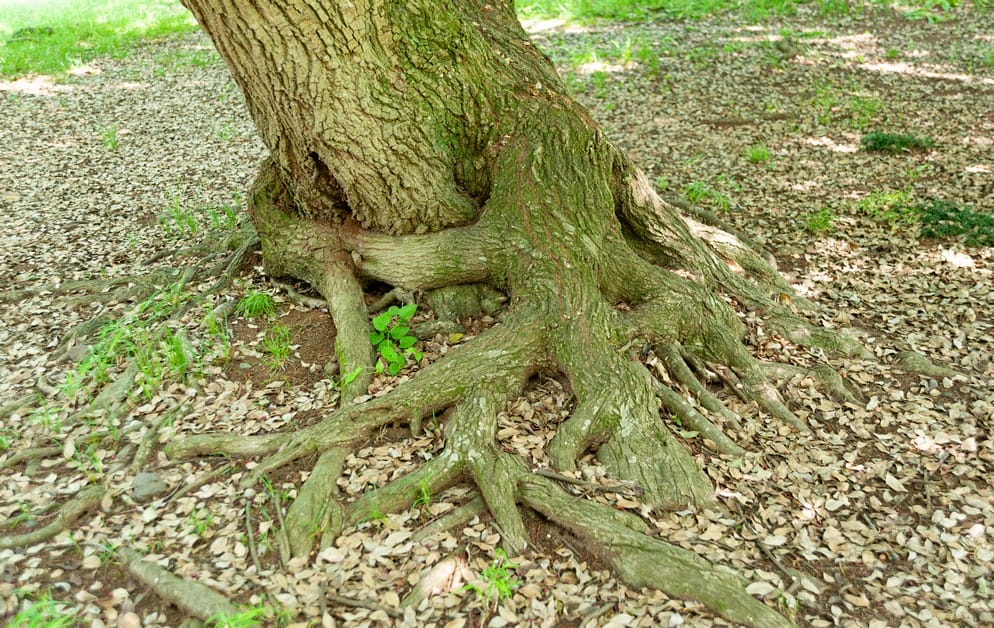
In this captivating blog post, we delve into the fascinating topic of tree roots that dare to soar above the soil’s surface, and provide remarkable solutions to thwart their audacious endeavors. Nursery and transplanting methods, as well as soil obstructions, commonly lead to the problem of “girdling roots.” When something tightly wraps around the trunk or stem of a tree, it becomes girdled. The stem-girdling root encircles or partially encircles the base of a tree at or just below the soil surface. Imagine a tree, growing under the pressure of a constricting leather belt, experiencing the same discomfort you feel when trying to enjoy a festive Christmas meal with an unbearably tight belt around your waist. Girdling the stem of your tree can be extremely detrimental as it obstructs the essential flow of water and nutrients required for its overall well-being and robust growth. It can also weaken the trunk, leading to instability and potential leaning. Moreover, girdling roots can cause a gradual decline in the tree’s health and ultimately result in premature death.
Understanding girdling roots and the factors that lead to this fascinating phenomenon is crucial before delving into prevention strategies. So dig out your green thumb and let’s dive in!
Understanding Girdling Roots
Girdling roots are more widespread than most people realize, and their impact can be devastating. When the lateral roots on the surface of the soil wrap around or penetrate the main trunk of a tree, the flow of water and nutrients becomes restricted, as mentioned before. The longer a tree is affected by girdling roots, the more it will weaken and become unstable. If left untreated, girdling roots can eventually lead to the decline and death of the tree. It’s important to recognize the signs of girdling roots early on and take appropriate actions to prevent further damage.
What Causes Girdling Roots?
In urban environments, trees face unique challenges that their rural or forest counterparts don’t. These factors can lead to various issues, such as girdling roots. Root girdling, often caused by incorrect planting or transplanting procedures, is the most common problem. If a tree remains in its nursery for an extended period, the roots tend to accumulate and circle at the bottom of the container due to limited space available. To ensure a successful tree planting, it is crucial to prioritize the loosening of tree roots as an integral part of the process.
Similarly, if the planting hole is too small, the tree roots will start to grow in a circular pattern, causing girdling roots over time. Additionally, leaving pieces of the planting container or other debris in the hole can lead to the formation of girdling roots as the tree establishes itself. Other factors such as heavily compacted soil and being in close proximity to foundations, curbs, and other obstructions can also impede proper, healthy root growth.
Identifying Girdling Roots
An abnormal tree trunk flare is the main indicator of girdling roots. Normally, the trunk flares out where it meets the ground. However, in trees with girdling roots, the trunk may appear straight or even narrower. Additionally, you may observe roots circling above the soil line, although usually girdling roots are just below the surface. Other less noticeable signs may include early leaf drops, smaller leaves, and canopy dieback.
How To Prevent Tree Girdling
Girdling roots should be removed, although it is crucial to seek advice from a certified arborist to prevent any harm to the main stem. In extreme situations, girdling roots may jeopardize the tree’s stability, necessitating the removal of the tree.
One of the most effective methods to prevent girdling roots is by properly digging the planting hole of the correct size. Later on, we will share some straightforward yet powerful techniques for successfully planting a tree to avoid girdling roots. A common misunderstanding is that deeper is better, but the planting hole should actually be two to three times wider than the root ball and no deeper than that. Soil should not cover the root flare, and mulch should not be placed up against the trunk.
We’ve compiled a few tips for treatment and prevention, including:
- Regularly inspecting the growth of trees is essential in order to promptly identify girdling roots during their early stages.
- To eliminate small girdling roots, you can use a sharp chisel and mallet. Remove several inches of the root where it meets the tree trunk to prevent reconnection.
- If there is a big girdling that has become attached to the tree trunk, it is recommended to leave it undisturbed. Making a V-shaped cut in the upper part of the girdling root may be beneficial in weakening it without interfering with the flow of nutrients to the top of the tree.
- If you are thinking about removing large girdling roots, especially those that are over two inches in diameter, it is highly recommended to seek the expertise of a professional arborist. This is a complex process that requires skilled hands and proper knowledge in order to be properly handled.
Should You Cut Girdling Roots?
It is not advisable to completely remove very large girdling roots, as they may still be providing significant amounts of water and nutrients to the tree’s canopy. Instead, they should be removed gradually over time, allowing the tree to adapt and compensate for the loss in water and nutrient flow. If any dieback occurs, it is recommended to remove the dead branches.
Tree Planting Tips To Avoid Future Girdling Roots
Knowing when the perfect moment to plant a tree is as vital as mastering the proper planting technique. Trees thrive on the nourishment derived from the soil and water, and their triumph hinges upon two critical factors: soil temperatures and water availability. To ensure robust root development and proper nutrient retention, it is imperative for the soil temperatures to consistently remain at or above ten degrees Celsius. Accordingly, the weeks leading up to the emergence of leaves in spring and the autumn when leaves have fallen serve as the ideal periods to embark on the tree planting journey. Isn’t it fascinating how nature effortlessly signals the opportune time to plant? It eloquently demonstrates that everything follows a harmonious cycle.
A reliable and steady water supply is essential for young trees to thrive and recover from natural rainfall or regular watering. Consistent access to water throughout the year can make a significant difference in the initial years after planting.
- Dig The Right Plant Hole Size: Making the hole three times wider than the current root mass is crucial for the healthy development of the plant. Avoid deepening the hole beyond the plant’s previous environment. The planting depth is a critical factor and can lead to premature death if not done correctly. When placing the tree in the hole, ensure that the root collar, where the roots connect to the main stem or trunk, is at ground level or slightly above.
- Plant Higher Thank You Would Assume: For a truly successful adaptation of trees to their new environment, we highly advise taking an additional measure. Position the trees so that up to 25% of the root ball is raised above the level of the surrounding soil. Then, carefully backfill the roots with soil and generously apply a layer of mulch on top. This approach not only prevents the trees from sinking below the desired level due to soil settling, but also provides vital protection against root rot and disease.
- Inspect The Circling Tree Roots: Once you have removed the plant from its container, carefully inspect the roots. If you observe tightly tangled roots in a circular formation or roots that have conformed to the shape of the container, it is crucial to intervene to prevent the roots from becoming root bound.
- Remove All Air Pockets: For optimal soil-to-root contact, it’s crucial to gently press the native soil around the plant roots. After backfilling halfway, a firm spray of water is essential to provide moisture and eliminate potentially damaging air pockets. Finally, complete the process with a thorough and meticulous watering of the plant.
- Encompass With A Layer of Mulch – But Not Too Much Mulch: For a robust soil-to-root connection, carefully press the natural soil around the plant roots. Moreover, after filling halfway, firmly water the hole. This not only provides vital moisture but also removes any air pockets that could damage the roots. Finally, water the plant again, ensuring a comprehensive and meticulous process.
- Watering Maintenance: Properly watering and establishing your trees after planting is essential. This crucial task can take weeks to months, and the key to success lies in slow and deep watering. However, manually achieving this can be impractical. The most efficient methods for ensuring proper tree establishment involve using soaker hoses or drip irrigation.
Tree Preservation and Care With Trusty Tree Services
Trusty Tree Services offers professional tree care services in Edmonton, Sherwood Park, Stony Plain, and the surrounding areas. Our skilled arborists provide expert tree care for residential, commercial, and municipal properties. Here are some ways to contribute to tree preservation in Edmonton with the assistance of the experts at Trusty Tree Services:
- Tree Maintenance: Maintaining your trees regularly is essential for their long-term health and longevity. Trusty Tree Services provides a comprehensive range of services dedicated to preserving the well-being of Edmonton’s trees. Our team of certified arborists can evaluate the state of your trees and offer expert advice on essential pruning, fertilization, and pest control. Through our rigorous care and meticulous attention to detail, we ensure that your trees will flourish for years to come. With Trusty Tree Services, you can rest assured that your trees are receiving the top-quality care they deserve.
- Environmental Stewardship: By choosing Trusty Tree Services, you’re not just taking care of your trees – you’re making a difference in Edmonton’s natural heritage. Our company actively engages with local initiatives and organizations dedicated to preserving green spaces. We prioritize sustainable practices and emphasize the importance of tree preservation and urban greenery. With Trusty Tree Services, you can trust that you’re making a positive impact while ensuring the well-being of your trees.
If you’re struggling with girdling tree roots, your friend, neighbour, mom, dad, or siblings, you can always rely on our certified arborists to come and check out what the problem is. Our professionals will be able to carve out the appropriate method to remove girdling roots, so your tree can breathe and prosper again! Reach out to Trusty Tree Services today, and let’s make the world a little more green one tree at a time!