Tree Fungus Dangers
Healthy trees bring a natural beauty to any landscape, improving the overall ambiance of any outdoor space. A tree with curled leaves, unnatural growths, and bare branches does not improve the space, and is a sign of a bigger issue: tree fungus. Identifying and addressing fungal infections promptly is crucial to maintaining the health and appearance of the tree, as well as preserving the beauty of the surrounding landscape. Your trusted Edmonton arborists can help you do just that.
If left untreated, fungal infections have the potential to weaken and ultimately kill trees. Adding to the problem is the fact that these infections can spread quickly, posing a threat to neighbouring trees and plants. Quite often, if you find one tree suffering from a fungal infection, there will be more trees in the immediate vicinity suffering as well. If you suspect that a tree in your area is suffering from a fungal infection, you should seek immediate professional assistance to prevent the spread to other trees and take preventive measures to protect nearby trees from potential fungal infestations.
Common Types of Tree Fungus Found In Edmonton
Tree fungus will greatly sicken and weaken any infected trees. Regular care, maintenance and inspections will help ensure your tree’s health, but even previously healthy trees can become infected. If you notice any signs of fungus on your trees, such as discoloration or unusual growths, it’s important to address the issue promptly. Tree fungus can spread quickly and have detrimental effects on the overall health of your trees if left untreated.
Some of the more common types of fungal infection you should keep an eye out for in Edmonton include:
Dutch Elm Disease (DED):
DED affects any type of elm tree, and since its introduction from Europe around the 1930s, it has destroyed millions of American elm trees across North America.
The elm bark beetle, which carries the disease, has been found in the province since 1994. DED has typically arrived three to seven years after the first detection of elm bark beetles in other jurisdictions, and the City of Edmonton has invested in a preventative strategy to protect one of the world’s last stands of healthy elms.
The early signs of infection appear from the end of June to the middle of July when the leaves at least one of the infected tree’s branches wilt, droop and curl, before turning brown, although they usually stay on the tree. If infected later in the summer, the leaves will droop, turn yellow and drop prematurely, and will often be confused with seasonal changes. These symptoms will be accompanied by brown staining in the sapwood. As it can be confused with other fungal infections, lab testing is needed to confirm
If left untreated, DED will lead to tree death.
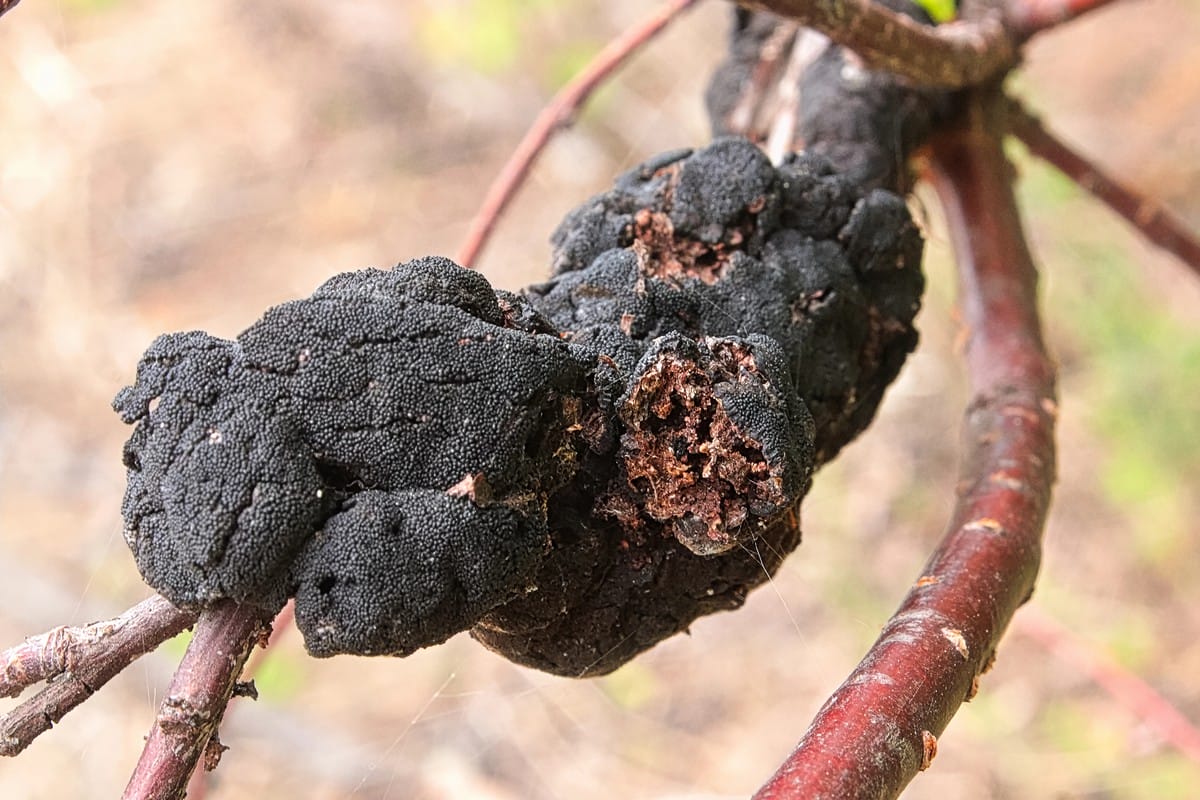
Black Knot Fungus
Cherry and plum trees are vulnerable to Black Knot Fungus. It appears as dark, rough growths on branches and twigs, deforming branches and reducing growth. It can weaken and stunt a tree’s growth, and eventually kill the tree if left untreated.
Unlike DED, it is a native plant disease and well established in the province.
Root Rot
Root Rot refers to several types of fungi that attack the roots of a plant, depriving it of water and nutrients. While some kinds of fungi, such as honey mushrooms, do appear on the infected plant, as others do not show any external signs of infection, so it can be hard to identify. However, yellowing or browning leaves, and a general thinning of its foliage, are signs that there is something wrong with your tree’s ability to feed itself.
Regularly monitoring your trees for any signs of fungal growth or overall decline that may indicate deeper root issues.
Dortiorella Elm Wilt
Dothiorella Elm Wilt causes the wilting and die-back of American and Siberian elm trees. It causes wilting, drooping, curling and yellowing of leaves, branch dieback, and browning of sapwood. It is very hard to distinguish from DED.
The disease attacks elm trees that are already under stress. Elms with Dothiorella Elm Wilt can live for years with low to moderate levels of fungal infection. However, not all infections lead to the death of the infected elm tree, as those with extensive canopy dieback are considered for removal.
While the tree can fight the disease with proper care, the problem lies in its ability to spread, as the disease is spread through its spores and is hard to contain.
Treating And Preventing Tree Fungus
The presence of fungal infection in one tree suggests that the environmental conditions are favorable for the spread of the disease to other nearby trees. It’s important that you monitor the health of any neighboring trees, and take preventive measures to control the spread of the infection. Regular inspection and appropriate treatment can help minimize the impact of the fungal disease on the entire tree population in the area. But be aware there is no perfect tree fungus treatment. What works for one tree may not work on another, even if they’re the same species, and factors like severity and spread can impact treatment options.
Treatments for different fungal infections will vary, so be sure to consult our ISA-certified arborists before attempting any treatments and preventative measures. Some common methods include:
Proper Watering Techniques
Stressed-out trees have a lower natural defense, making them more susceptible to disease and infection. Proper watering, particularly during periods of drought, can reduce a tree’s stress, and ensure your tree is getting enough water.
Avoiding over-watering your treat, as excessive moisture in soil with poor drainage can lead to root rot. Your Edmonton arborists can assess your soil conditions and provide tips on how to better irrigate your trees.
Pruning
The pruning of diseased or infected branches may help slow or eliminate fungal infections. However, for disease control purposes, pruning certain types of trees may only be allowed during certain times of the year. Speak to our expert arborists about when you may be allowed to prune your trees, and keep a diligent watch on any potential or neighbouring trees.
Antifungal Treatments
After pruning, you often can apply fungicide to your tree, but keep in mind that not all fungicides are alike, as they can be applied in different ways. Additionally, antifungal treatments may not work on some diseases, such as Dortiorella Elm Wilt.
Be sure to do your research before applying any treatment, and speak to a professional arborist about your options.
Count On Us For Trusty Tree Services
Regular monitoring and maintenance of your trees can go a long way in preventing tree fungus from taking hold of your tree. In addition to regular monitoring and maintenance, proper pruning techniques and ensuring good airflow in your soil can also help minimize the risk of tree fungus, and promote a healthy growing environment for your trees.
Our arborists are ISA-certified, and are dedicated to helping you with all your tree care and maintenance service needs. We offer a wide range of services, including tree pruning, tree removal, deep root fertilization and tree consultation services. Contact us today for your free quote, and learn how we can help you care for your trees.