
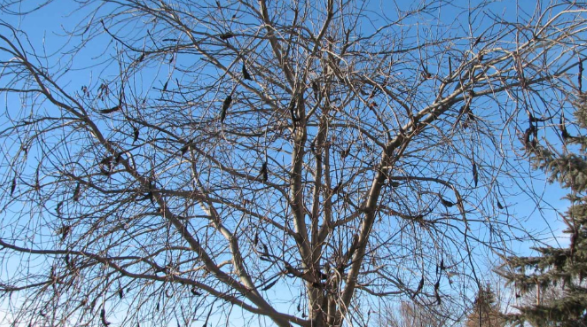
As November arrives, winter silhouettes Edmonton’s trees more clearly. With the leaves gone, branches are exposed, and hidden problems become easier to spot. Among these problems, Black Knot, a fungal disease, affects trees in the Prunus family.
Winter is a quiet season for tree care. During this season, homeowners can do a complete inspection of the tree and its parts. They can identify infected branches and hire tree surgeons to remove the Black Knot before the growing season starts.
Why is black knot easier to see in winter?
In summer, dense foliage easily hides the dark, swollen growths caused by Black Knot. During winter, when the leaves fall, these black growths become more visible, especially on the bare branches. When taking a closer look at the trees, homeowners should watch for signs like elongated, rough black growths around the branches and twigs.
New Black Knot infections look smaller at first, while older knots are larger and more visible. This makes November a good time for a second sweep of trees inspected earlier in the year.
Cut out the infection before spring
Black knot does not disappear when the temperatures drop. Instead, the infected sections remain on the tree and can restart the disease cycle when conditions become suitable again. Removing the infected section during the dormant season is rather important. Pruning helps retain healthy wood and remove the fungal infection. Professional assessment by an arborist becomes valuable during this time. Removing small parts may leave the tree infected, while unnecessary cuts can remove healthy wood.
When is aggressive pruning a necessity?
Sometimes infections are limited to small twigs. However, if the infection develops on larger structural limbs, it can infect a significant portion of the tree. The objective is not to cut the limbs, but to locate the infection and remove it. The professional tree surgeon considers the infection’s location, the branch’s structure, and the tree’s overall health before pruning. Along with aggressive pruning, in some cases the surgeons focus on decisive pruning or recommending full removal if the disease has gone too far.
Think beyond the cut
Removing an infected part of the branch is not the only step in black knot management. You must handle the infected parts properly. If you leave infected branches beneath the tree, they can infect the rest of the tree as well. Proper disposal is necessary to stop the spread of fungal material.
Why is winter the perfect time to act?
Dormant-season pruning offers a practical opportunity to address structural and disease-related issues. In winter, tree branches are bare, giving you full visibility. A careful inspection is part of a wider winter-readiness plan, helping identify the diseased and damaged parts of the trees.
Don’t let the Black Knot return easily with Spring
Black Knot may remain unidentified during the spring. But winter exposes problems. Hire arborists for a complete winter inspection. Black Knot is back. Call Trusty Tree Services to remove the infection and save your tree.
📞 Call us for a free estimate 780.860.5500
🔗 Visit our website to learn more https://trustytree.ca/
Trusty Tree Services supports municipal and utility projects while delivering safe, efficient tree care to industrial, commercial, and residential clients in the Edmonton and surrounding area.
Related Articles
Follow Us on Social Media
Stay updated with our latest news and tips by following us on Facebook and Instagram